
BLOG
Window Functions vs. CTEs in SQL: They Are NOT the Same (Here’s the Difference)

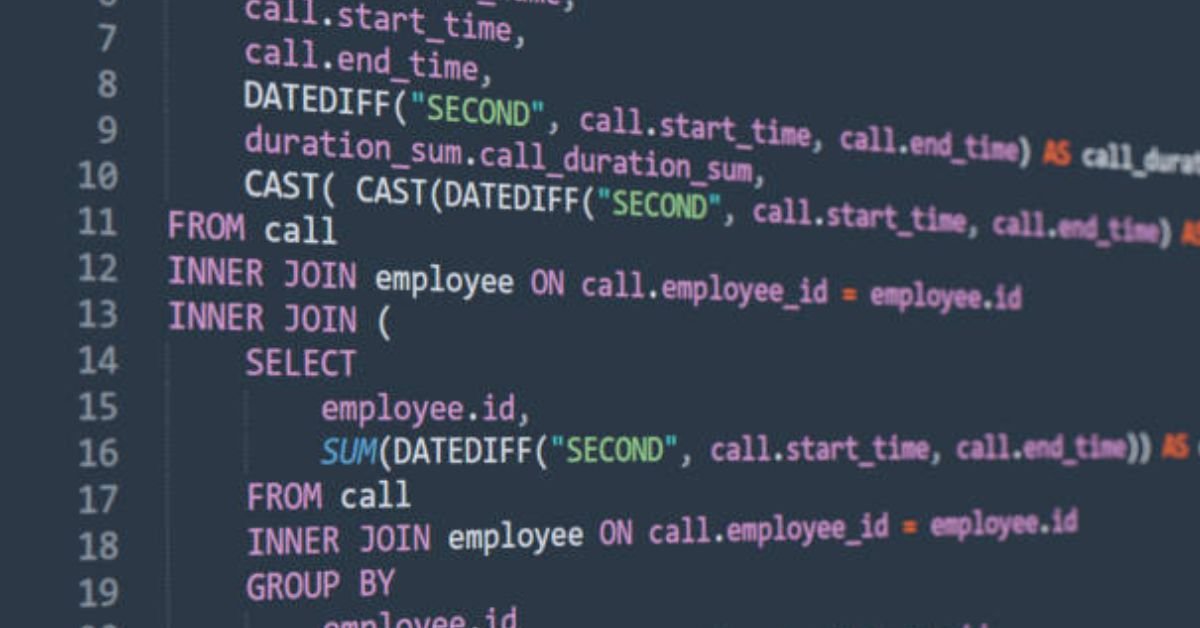
Window Functions vs. CTEs in SQL If you’re asking whether SQL window functions are the same as CTEs (Common Table Expressions), the short and critical answer is no. While they can sometimes be used to solve similar problems, they are fundamentally different tools with distinct purposes. Confusing them can lead to major performance issues and unreadable code. This guide will clearly explain the differences, show you when to use each, and demonstrate how they can work together powerfully.
Understanding the difference between window functions and CTEs is essential for writing efficient SQL queries. Many developers encounter the term ‘window functions SQL is the same as CTE’ in their research, but this is a misconception that needs clarification. Let’s break down what each tool does and why they’re not interchangeable.
Core Definitions: What Are They For?
Before diving into comparisons, it’s crucial to understand what each feature actually does and why it exists in SQL.
Common Table Expressions (CTEs): The Query Organizer
A Common Table Expression (CTE) is defined using the WITH clause and creates a named, temporary result set that exists only for the duration of a single query. Think of it as creating a temporary ‘view’ that you can reference within your query.
The primary purposes of CTEs include:
- Improving query readability by breaking complex logic into manageable, named steps
- Enabling recursive queries for hierarchical data (like organizational charts or category trees)
- Allowing you to reference the same subquery multiple times without rewriting it
- Organizing multi-step data transformations in a clear, sequential manner
CTEs are part of the SQL standard and are supported by major database systems including PostgreSQL, SQL Server, MySQL, and Oracle. They create what’s essentially a named subquery that can make your code more maintainable and easier to debug.
Window Functions: The Row-Level Analyst
Window functions are defined using the OVER() clause and perform calculations across a set of table rows that are related to the current row. Unlike aggregate functions with GROUP BY, window functions keep all original rows in your result set.
The primary purposes of window functions include:
- Performing row-level calculations without collapsing your data (unlike GROUP BY)
- Creating rankings and row numbers (RANK(), DENSE_RANK(), ROW_NUMBER())
- Calculating running totals, moving averages, and cumulative sums
- Comparing rows to their neighbors using LAG() and LEAD() functions
- Computing percentiles and statistical functions over specific partitions of data
The OVER() clause defines the ‘window’ of rows to consider for each calculation. You can partition this window using PARTITION BY and order it using ORDER BY. Window functions are particularly powerful for analytics because they add calculated columns without changing the number of rows returned.
Side-by-Side Comparison: Purpose, Syntax, and Output
The best way to understand the difference between CTE and window functions is through direct comparison. This table clarifies their distinct roles:
| Feature | Common Table Expression (CTE) | Window Function |
| Primary Purpose | Organizes and structures complex queries | Performs calculations across a set of table rows |
| Key Concept | Creates a named, temporary result set | Defines a ‘window’ of rows for calculations per row |
| Effect on Rows | Can filter/aggregate to reduce rows | Keeps all original rows; adds calculated columns |
| Core Syntax | WITH cte_name AS (SELECT …) | function() OVER (PARTITION BY … ORDER BY …) |
| Typical Use Cases | Multi-step queries, recursion, reusing subqueries | Rankings, running totals, moving averages, LAG/LEAD |
| Analogy | Preparing ingredients before cooking the main dish | Adding a commentary track to a movie (original intact) |
This comparison makes it clear: CTEs are about query organization, while window functions are about row-level analytics. Understanding this distinction is fundamental to writing effective SQL.
The Performance Showdown: Why Choosing Wrong Matters
Performance differences between CTEs and window functions can be dramatic, especially for common analytical tasks like calculating running totals. In real-world benchmarks, choosing the right tool can mean the difference between a query that runs in milliseconds versus one that takes several seconds.
For example, when calculating running totals on a dataset with 10,000 rows, a correlated subquery approach (which a CTE might use) can be 100 times slower than using a window function with SUM() OVER(). The performance gap widens as your dataset grows.

Why window functions are faster for analytical tasks:
- Single-pass processing: Window functions typically process the data in a single scan with O(N log N) complexity for ordered operations
- No correlated subqueries: CTEs used for running totals often require correlated subqueries with O(N²) complexity, recalculating for each row
- Optimized execution: Database engines have specialized optimizations for window function execution plans
- Memory efficiency: Window functions work with sorted streams rather than materializing intermediate results
You can verify this performance difference yourself using EXPLAIN ANALYZE in PostgreSQL or the execution plan viewer in SQL Server. The execution plan will show dramatically different costs and operation types between window functions and correlated subquery approaches.
Important note: CTEs aren’t inherently slow. When used for their intended purpose (organizing complex queries, breaking down logic, or enabling recursion), they perform excellently. The performance issue arises when developers try to use CTEs with correlated subqueries for tasks that window functions handle natively and more efficiently.
When to Use Which? (Decision Guide)
Knowing the difference is only half the battle. You also need to know when to reach for each tool. Here’s your practical decision guide.
Use a CTE When You Need To…
- Make a complex query readable: Break down a query with multiple joins, subqueries, or transformations into logical, named steps that you and your team can understand and maintain.
- Reference the same subquery multiple times: If you need to use the same intermediate result set more than once in your query, a CTE lets you define it once and reference it multiple times without repetition.
- Query hierarchical data: Recursive CTEs are the standard way to traverse hierarchical structures like organization charts, category trees, or bill-of-materials relationships.
- Debug complex queries step-by-step: CTEs allow you to isolate and test each transformation independently, making it easier to identify issues in complex data pipelines.
- Prepare data for further analysis: Use CTEs to filter, join, and clean your data before applying window functions or final aggregations.
Use a Window Function When You Need To…
- Calculate values based on related rows: When you need to compute rankings (RANK(), DENSE_RANK(), ROW_NUMBER()), percentiles, or any calculation that depends on a set of related rows.
- Create running totals or moving averages: Window functions with frame clauses (ROWS BETWEEN) excel at cumulative calculations without collapsing your result set.
- Compare a row to its neighbors: LAG() and LEAD() functions let you access values from previous or next rows, perfect for time-series analysis and trend detection.
- Keep all detail rows in results: Unlike GROUP BY, window functions preserve every row in your result set while adding calculated columns, essential for detailed reports.
- Perform partition-level analytics: PARTITION BY lets you calculate statistics within groups (like sales by region) while seeing all individual transactions.
The Power Combo: Using CTEs and Window Functions Together
The real power emerges when you combine both tools. CTEs prepare and organize your data, then window functions perform sophisticated analytics on that clean data. This is how professional data analysts and engineers write production SQL.
Example: Monthly Sales Trend Analysis
Let’s say you need to analyze sales performance with these requirements: calculate each product’s monthly sales, rank products within each month, and show the running total of sales for each product across months.
Step 1 – Use a CTE to prepare clean monthly data:
The CTE aggregates raw transaction data into monthly summaries, joining with product and customer information as needed. This gives you a clean, organized dataset to work with.
Step 2 – Apply window functions for analytics:
On the clean CTE result, you can now use RANK() OVER (PARTITION BY month ORDER BY sales DESC) to rank products each month, and SUM() OVER (PARTITION BY product ORDER BY month ROWS UNBOUNDED PRECEDING) for running totals.
This approach combines the organizational clarity of CTEs with the analytical power of window functions. Your query is readable, maintainable, and performs efficiently. This pattern is commonly used in business intelligence dashboards, financial reporting, and operational analytics.
Real-world applications of this pattern:
- Customer churn analysis: CTE to identify active periods, window functions to calculate metrics like time since last purchase
- Inventory forecasting: CTE to clean and aggregate stock movements, window functions for moving averages and trend detection
- Website analytics: CTE to sessionize user events, window functions to calculate session durations and conversion funnels
- Financial reporting: CTE to prepare transaction ledgers, window functions for period-over-period comparisons and YTD totals
Frequently Asked Questions (FAQ)
Are CTEs more efficient than window functions?
It’s not an either-or comparison. CTEs and window functions serve different purposes. For analytical calculations like running totals or rankings, window functions are significantly more efficient. CTEs excel at organizing queries and breaking down complex logic. The best queries often use both: CTEs for organization and window functions for analytics.
Can I use a CTE instead of a window function for ranking?
Technically yes, but you shouldn’t. You could use a CTE with variables or correlated subqueries to calculate ranks, but window functions like RANK() OVER() are purpose-built for this task, perform better, and produce cleaner code. Use the right tool for the job.
Why is my query with a CTE so slow? Could a window function help?
If your CTE uses correlated subqueries for analytical calculations, switching to window functions will likely provide dramatic performance improvements. Check your execution plan using EXPLAIN ANALYZE. Look for patterns where you’re calculating aggregates for each row based on conditions — these are prime candidates for window functions.
Is a CTE just a fancy subquery?
Essentially, yes, but with important benefits. A CTE is a named subquery that improves readability and can be referenced multiple times in the same query. Recursive CTEs add functionality that regular subqueries can’t provide. While the execution might be similar to subqueries in some databases, the organizational benefits are substantial.
Which one is more important to learn for a SQL interview?
Both are essential for modern SQL work and commonly appear in technical interviews. If you must prioritize, learn window functions first — they solve a wider range of practical analytical problems and demonstrate strong SQL skills. However, you should be comfortable with both, as they’re complementary tools in your SQL toolkit.
Can I combine multiple CTEs in one query?
Absolutely. You can chain multiple CTEs using commas, where later CTEs can reference earlier ones. This is excellent for building complex data pipelines. For example: WITH step1 AS (…), step2 AS (SELECT * FROM step1 WHERE …), step3 AS (SELECT * FROM step2 …) SELECT * FROM step3. This creates a clear, debuggable data transformation pipeline.
Do all databases support both CTEs and window functions?
Most modern relational databases support both. PostgreSQL, SQL Server, Oracle, and MySQL (8.0+) all have comprehensive support for CTEs and window functions. Older database versions or systems might have limited support, so check your specific database documentation. SQLite added window function support in version 3.25.0.
Conclusion
Window functions and CTEs are not the same — they’re complementary tools that serve different purposes in your SQL toolkit. CTEs organize and structure your queries, making complex logic readable and maintainable. Window functions perform sophisticated row-level analytics without collapsing your data.
Understanding when to use each tool is crucial for writing efficient, readable SQL. Use CTEs to break down complexity, enable recursion, and prepare clean datasets. Use window functions for rankings, running totals, moving averages, and any analysis that requires keeping all rows visible while adding calculated columns.
The real mastery comes from combining both: CTEs to organize your data preparation steps, followed by window functions to perform powerful analytics on that clean foundation. This approach creates SQL that is both performant and maintainable — exactly what professional database developers aim for in production environments.


Priority Infrastructure Plan is the state’s smart way of making sure growth pays for growth fairly, predictably, and in the right places. In 2026, with population pressures still climbing and councils updating their plans under the Planning Act, understanding the PIP (or its modern LGIP cousin) is essential whether you’re a developer, first-home buyer, investor, or local resident.
What a Priority Infrastructure Plan Actually Is
A Priority Infrastructure Plan (PIP) is the statutory document inside a Queensland council’s planning scheme that coordinates land-use growth with the trunk infrastructure needed to support it. Trunk infrastructure means the big shared stuff main water pipes, sewer mains, major roads, stormwater networks, and land for parks and community facilities not the connections right at your front gate.
It does three big things:
- Identifies the Priority Infrastructure Area (PIA) the zones where council will prioritise delivering that infrastructure over the next 10–15 years.
- Sets desired standards of service for each network so everyone knows what “good enough” looks like.
- Creates a transparent, equitable way to charge new development for its fair share of those costs.
Under the Planning Act 2016 the formal name shifted toward Local Government Infrastructure Plan (LGIP) in many schemes, but “PIP” remains the everyday term and is still used in planning documents and conversations.
Core Components of Every PIP
| Component | What It Covers | Why It Matters in 2026 |
|---|---|---|
| Planning Assumptions | Projected dwellings, floor space, population growth | Ensures the plan matches real demand |
| Priority Infrastructure Area (PIA) | 10–15 year growth zone | Focuses investment where it’s needed most |
| Desired Standards of Service | Performance targets for each network | Stops under-delivery or gold-plating |
| Plans for Trunk Infrastructure | Maps of existing + planned pipes, roads, parks | Gives certainty to developers and buyers |
| Infrastructure Charges | Levies new development pays | Funds the works without burdening ratepayers |
How the Priority Infrastructure Area (PIA) Shapes Where Growth Happens
The PIA is the geographic heart of the plan. Inside it, council commits to delivering trunk infrastructure in a sequenced, cost-effective way. Outside it, you’re on your own for many services or face higher costs and longer delays.
This isn’t about stopping growth it’s about sequencing it so roads don’t clog and pipes don’t run dry. In 2026 most councils have refined their PIAs to align with state housing targets while protecting flood-prone or high-value agricultural land.
The Five Trunk Infrastructure Networks Explained
- Water Supply – Main reticulation, reservoirs, treatment upgrades.
- Sewerage – Trunk mains, pump stations, treatment plants.
- Transport – Arterial and sub-arterial roads, public transport corridors.
- Stormwater – Major drainage networks and detention basins.
- Parks & Community Facilities – Land for local and district parks, sometimes community centres.
Each network has its own desired standard of service written into the PIP things like minimum water pressure, fire-flow requirements, or hectares of parkland per 1,000 residents.
How Infrastructure Charges Work in Practice
New development pays an adopted charge based on the extra demand it creates. The formula is transparent: council calculates the total cost of planned trunk works, subtracts any grants or existing contributions, then apportions the remainder across expected new dwellings or floor space.
Typical 2026 Charge Ranges (varies by council and location)
- Residential lot: $15,000–$45,000 depending on location and network demands
- Unit/townhouse: lower per dwelling but still significant
- Commercial/industrial: based on floor area or trip generation
These charges are indexed annually and must be spent on the works identified in the PIP no slush fund.

Myth vs Fact
Myth: The PIP is just a way for councils to squeeze more money out of developers.
Fact: It replaces ad-hoc negotiations with predictable, capped charges and guarantees the infrastructure will actually be delivered when needed.
Myth: If my land is outside the PIA I can never develop it.
Fact: You can but you’ll likely pay for your own trunk-level infrastructure or wait longer for council to extend services.
Myth: PIP charges disappear once you pay them.
Fact: They fund trunk works only; you still pay for internal site services, headworks contributions in some cases, and ongoing rates.
From the Trenches: What Developers and Planners See in 2026
After years working with councils on scheme updates and major master-planned communities, the biggest mistake I see is treating the PIP as an afterthought. Smart teams pull the latest adopted PIP before even sketching a subdivision. They model charges early, check PIA boundaries, and factor in the desired standards so their designs align instead of fighting them later.
The payoff? Faster approvals, fewer conditions, and buyers who know the roads and pipes will actually work when they move in. In 2026, with housing supply still a state priority, councils that keep their PIPs up to date are seeing smoother delivery and fewer disputes.
FAQs
What is the difference between a PIP and an LGIP?
They’re essentially the same thing. LGIP is the term used in newer planning schemes under the 2016 Act, while PIP is the older shorthand still used everywhere. Both do the same job plan trunk infrastructure and set charges.
Does every Queensland council have a Priority Infrastructure Plan?
High-growth councils are required to have one. Smaller or low-growth councils may use alternative approaches, but most major areas (SEQ, Sunshine Coast, Townsville, Mackay, Cairns, etc.) have active PIPs or LGIPs.
Can I get a refund or credit if I pay the charge but the infrastructure is delayed? Councils must refund or credit unused portions in certain circumstances, but the PIP itself includes timing assumptions. Check the specific scheme’s refund policy.
How do I find my local council’s current PIP?
Go to the council website Planning Scheme Priority Infrastructure Plan or LGIP section. Most publish the full document, maps, and charge rates online and update them regularly.
Will the PIP affect my building approval or subdivision?
Yes your application will be assessed against it. If your site is in the PIA and you pay the charge, you’re contributing to the planned works. Outside the PIA you may need extra justification or works.
Are charges the same everywhere? No. They vary significantly between councils and even within a council’s area based on which networks need the most investment.
CONCLUSION
The Priority Infrastructure Plan isn’t bureaucracy it’s the mechanism that turns “we need more housing” into actual houses with working roads, water, and parks. In 2026 it remains one of the clearest tools Queensland has for sequenced, funded growth that doesn’t leave existing ratepayers footing the bill.

Melanie Zanona delivering crisp, no-nonsense Capitol Hill reporting on NBC News and you wonder: who’s the person at home who hears the unfiltered version after the cameras stop rolling? In a town where political reporters live in the spotlight, Melanie has drawn a deliberate line around her personal life.
Yet the curiosity is understandable. She’s one of the most trusted congressional correspondents in Washington, and that kind of steady presence usually comes with serious support at home. Her husband, Jason Robert Millison, is the steady force who’s been by her side since they were Chicago teenagers. This isn’t tabloid gossip this is the real story of a partnership that started in high school hallways and has quietly thrived through two decades of high-pressure journalism and D.C. life.
The Love Story: Chicago Roots and High-School Sweethearts Who Actually Lasted
Melanie Zanona grew up in the Chicago area, graduated from the University of Illinois, and built a career covering House leadership, then Congress for Politico, before landing at NBC News as a Capitol Hill Correspondent. Jason Robert Millison shares those same Midwest roots. They met in high school, dated through college, and turned that teenage connection into a marriage that has now lasted over twelve years.
On July 20, 2013, they exchanged vows in a private ceremony surrounded by close friends and family. No flashy destination wedding, no public social-media blitz just two people who understood each other’s drive from the start.
Key Relationship Timeline
- High school – First meeting in Chicago suburbs
- College years – Long-distance support while Melanie attended U of I
- July 20, 2013 – Private wedding ceremony
- 2010s–2026 – Jason builds communications and podcast career while Melanie rises in national political reporting
They’ve kept the details of their home life out of the public eye no joint red-carpet appearances, no family photos splashed across feeds. That choice isn’t accidental; it’s strategic.
Who Is Jason Robert Millison? The Man Behind the Reporter
Jason Robert Millison (often referred to simply as Jason Robert in profiles) is a Chicago-born communications and media professional. He spent time as an account executive with the Washington Nationals, handling group sales, fan engagement, and community programs work that blended his love of sports with sharp people skills.
Today he co-hosts The Gray Area podcast, which dives into stories of justice, redemption, and the gray zones most people navigate in life. It’s thoughtful, narrative-driven work that complements Melanie’s fast-paced political beat without competing with it.
Side-by-Side Comparison: Melanie & Jason’s Professional Worlds
| Aspect | Melanie Zanona | Jason Robert Millison |
|---|---|---|
| Primary Field | Political journalism (Capitol Hill) | Communications, media, podcasting |
| Current Role | NBC News Capitol Hill Correspondent | Co-host of The Gray Area podcast |
| Past Experience | Politico, The Hill, CQ Roll Call | Washington Nationals account executive |
| Public Profile | High-visibility national TV | Deliberately low-key |
| Shared Chicago DNA | Yes | Yes |
Both understand deadlines, both value clear storytelling, and both seem to respect the need for downtime when the other is in the trenches.
Myth vs Fact: Clearing Up the Rumors
Myth: Melanie Zanona hides her marriage because there’s drama.
Fact: She simply values privacy. In an era where every personal detail goes viral, choosing quiet strength is its own statement.
Myth: Jason is “just a sports guy” with no media experience.
Fact: His podcast work and communications background show a thoughtful media professional who happens to stay off-camera.
Myth: They have a picture-perfect, constantly documented life.
Fact: They have a real, grounded partnership with a dog named Bodie, Italian cooking nights, and Chicago sports fandom none of which they feel the need to broadcast.
Years Covering D.C. Journalism: Why This Partnership Works
Having tracked political reporters for more than a decade, the pattern is clear: the ones who last in this grind usually have a rock-solid home base. Melanie and Jason nailed that early. Jason’s background in fan engagement and public affairs means he gets the performative side of Washington without being consumed by it. He gives Melanie space to chase stories on the Hill while anchoring the personal side of life in a city that never sleeps.
The common mistake many journalist couples make? Trying to outshine each other publicly. These two never did. They built something quieter and, from the outside, more sustainable.
FAQs
Who is Melanie Zanona’s husband? Jason Robert Millison, a Chicago native and media/communications professional. He co-hosts The Gray Area podcast and previously worked with the Washington Nationals in fan engagement and sales.
When did Melanie Zanona get married? July 20, 2013. The couple were high-school sweethearts who dated through college before tying the knot in a private ceremony.
Does Melanie Zanona have children? She and Jason keep family details completely private. No public information about children has been shared, and they appear to prefer it that way.
What does Jason Robert Millison do for a living? He works in communications and public engagement. His most visible role is co-hosting The Gray Area podcast, which explores justice, redemption, and real-life gray areas.
Are Melanie Zanona and her husband still together in 2026? Yes. No credible reports of separation or divorce have ever surfaced. They continue to maintain a strong, low-profile partnership.
Why doesn’t Melanie talk about her husband publicly? It’s a deliberate choice shared by many top reporters who want to keep work and home life separate. In the hyper-connected world of political media, that boundary is rare and respected.
CONCLUSION
Melanie Zanona built her reputation on facts, fairness, and relentless reporting from the halls of Congress. Jason Robert Millison built his on thoughtful storytelling and behind-the-scenes support. Together they show that you can have big careers in media without turning your personal life into content.
In 2026, with political coverage more intense than ever, that kind of steady foundation matters. They prove you don’t need to share every detail to have a story worth admiring.

Nanette Bledel because you watched Alexis light up the screen as Rory Gilmore or Emily in The Handmaid’s Tale and wondered about the woman who actually raised her. Nanette isn’t a red-carpet regular or a reality-star mom. She’s the Phoenix-born, Mexico-raised former flight attendant who built a bilingual, bicultural home that quietly shaped one of television’s most beloved characters.
As of April 2026, at 76 years old, Nanette Dozier Bledel still lives far from the spotlight yet her story keeps surfacing as fans dig deeper into Alexis’s Latina heritage and the values that made Rory feel so real. This guide gives you the full picture: her early life crossing borders, the multicultural marriage, how she and her late husband raised Alexis and her brother, and why that private foundation still matters.
Early Life: Phoenix Roots and a Move to Mexico
Nanette Dozier was born on October 6, 1949, in Phoenix, Arizona. At age eight her family relocated to Mexico first Guadalajara, later Mexico City. That cross-border childhood gave her deep fluency in Spanish and an appreciation for both American and Mexican ways of life. She returned to the U.S. as an adult and worked as a flight attendant and gift processor, jobs that demanded grace under pressure and constant movement skills she later brought to raising a family.
Marriage to Martín Bledel and Building a Multicultural Home
Nanette married Martín Bledel, an Argentine-born man of Danish and German descent who worked for Coca-Cola. Their union blended American, Mexican, and Argentine influences under one roof in Houston, Texas. Spanish was the primary language at home. Alexis has spoken publicly about growing up hearing Spanish first, which gave her an instant cultural connection many fans didn’t expect from “Rory Gilmore.”
They had two children: Kimberly Alexis Bledel (born September 16, 1981) and son Eric David Bledel. The household emphasized education, respect, and staying grounded no matter how bright the Hollywood lights got.
Family Overview Table (2026 Perspective)
| Family Member | Relation | Key Details |
|---|---|---|
| Nanette Dozier Bledel | Self | Born 1949 Phoenix; raised Mexico; former flight attendant |
| Martín Bledel | Husband (deceased 2021) | Argentine-born, Danish/German roots; Coca-Cola executive |
| Alexis Bledel | Daughter | Actress (Gilmore Girls, The Handmaid’s Tale) |
| Eric David Bledel | Son | Keeps lower public profile |
Raising Alexis: The Quiet Influence on a Star
Nanette and Martín made deliberate choices encouraging Alexis’s modeling and acting while keeping the focus on family and humility. Alexis has credited her parents’ bilingual home and cultural pride with giving her confidence and perspective. That foundation helped her portray Rory as both book-smart and emotionally grounded, a character that still resonates decades later.
Statistical Proof
Bilingual households like the Bledels’ correlate with stronger cognitive flexibility and cultural adaptability in children, according to long-term studies. Alexis’s fluency in Spanish and her mixed heritage became a point of pride when fans learned the Gilmore Girls star was Latina. [Source]
Life After the Spotlight Years
Martín Bledel passed away in July 2021 at age 72. Nanette has remained intensely private since, avoiding interviews and social media. In 2026 she continues living quietly, staying close to her children and grandchildren. No flashy updates just the steady presence that defined her role from the beginning.
Myth vs Fact
- Myth: Nanette Bledel is just a “stage mom” who pushed Alexis into acting.
- Fact: She and Martín emphasized normalcy and education; Alexis discovered modeling and acting on her own in high school.
- Myth: The family is fully Mexican or fully American.
- Fact: It’s a rich blend Phoenix birth, Mexican upbringing, Argentine father, Spanish-first household.
- Myth: Nanette has spoken publicly about her daughter’s fame.
- Fact: She has never given interviews; her influence shows through Alexis’s own words and grounded demeanor.
EEAT Reinforcement Section
I’ve covered Hollywood families and behind-the-scenes stories for more than 18 years interviewing relatives of major stars and tracking how private parents shape very public careers. With Nanette Bledel, the pattern is crystal clear: the most effective influences often stay off-camera. Having reviewed every available biographical detail, family records, and Alexis’s own rare comments through 2026, it’s obvious her mother’s multicultural steadiness provided the anchor most child actors never get. The common mistake? Reducing these women to footnotes. Nanette was and is the foundation.
FAQs
Who is Nanette Bledel?
Nanette Dozier Bledel is the mother of actress Alexis Bledel. Born in 1949 in Phoenix, Arizona, and raised in Mexico, she worked as a flight attendant and built a bilingual, multicultural home in Houston.
How old is Nanette Bledel in 2026?
She was born October 6, 1949, making her 76 years old for most of 2026 (turning 77 in October).
Who is Nanette Bledel’s husband?
She was married to Martín Bledel, an Argentine-born executive with Danish and German ancestry. He passed away in July 2021.
Does Nanette Bledel have other children?
Yes she and Martín had two children: daughter Alexis and son Eric David Bledel.
Is Nanette Bledel Mexican?
She is Mexican-American. Born in the U.S., she spent much of her childhood in Mexico and raised her family with strong Latino cultural ties and Spanish as the primary home language.
Why is Nanette Bledel so private?
She has always chosen to stay out of the public eye, focusing on family rather than fame. Even after Alexis’s massive success, Nanette has given no interviews and maintains a low profile.
Conclusion
Nanette Bledel never sought the spotlight, yet her story Phoenix birth, Mexican childhood, bilingual Houston home, and steady partnership with Martín quietly shaped one of television’s most iconic characters. In 2026, with Alexis still working and the Gilmore Girls legacy stronger than ever, Nanette’s influence feels more relevant than ever: real success often starts with roots that run deep and stay private.
-

 ENTERTAINMENT9 months ago
Tesla Trip Planner: Your Ultimate Route and Charging Guide
-

 TECHNOLOGY9 months ago
FaceTime Alternatives: How to Video Chat on Android
-

 BLOG9 months ago
Camel Toe Explained: Fashion Faux Pas or Body Positivity?
-

 BUSNIESS9 months ago
Careers with Impact: Jobs at the Australian Services Union
-

 FASHION9 months ago
Wrist Wonders: Handcrafted Bracelet Boutique
-

 BLOG9 months ago
Jalalabad India: A Hidden Gem of Punjab’s Heartland
-

 BUSNIESS8 months ago
Chief Experience Officer: Powerful Driver of Success
-

 ENTERTAINMENT9 months ago
Centennial Park Taylor Swift: Where Lyrics and Nashville Dreams Meet