
BUSNIESS
Chief Experience Officer: Powerful Driver of Success


Chief Experience Officer (CXO) is the executive responsible for overseeing and optimizing every aspect of a company’s customer and employee experience. Unlike traditional roles that focus on a single department, the CXO’s mission is holistic: to break down silos, align teams, and ensure that every interaction—online, offline, internal, or external—delivers value and delight.
Why does this matter? Because in 2025, experience is everything. Customers have endless choices, and employees expect more than just a paycheck. The brands that win are those that make every moment count.
CXO Meaning: More Than Just a Title
So, what’s the real cxo meaning? While “CXO” can refer to any “chief x officer” (like CEO, CFO, or CTO), in today’s business world, it’s most often shorthand for chief experience officer. This role is all about championing the end-to-end journey—whether that’s a customer buying a product, an employee onboarding, or a partner collaborating on a new initiative.
CXOs are the bridge between strategy and execution, data and empathy, technology and humanity.
Chief Experience Officer vs Chief Customer Officer: What’s the Difference?
It’s easy to confuse the chief experience officer with the chief customer officer (CCO). Both roles are focused on experience, but there are key differences:
- Chief Customer Officer: Primarily focused on the customer journey, satisfaction, and loyalty. The CCO is the voice of the customer at the executive table.
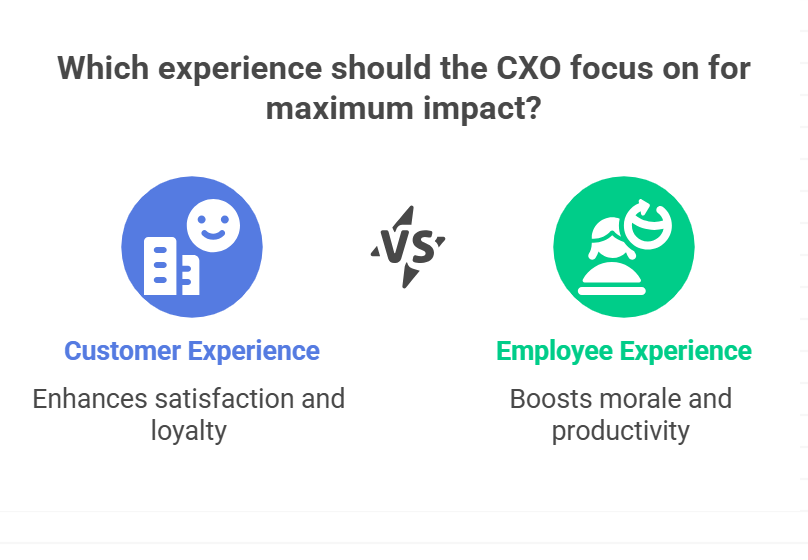
- Chief Experience Officer: Broader in scope, the CXO oversees both customer and employee experiences, as well as partner and brand experiences. The CXO’s goal is to create a unified, consistent, and positive experience for everyone who interacts with the company.
In short, all CCOs are CXOs, but not all CXOs are CCOs. The chief experience officer is the next evolution—one that recognizes experience as a company-wide responsibility.
Why Are CXOs in Such High Demand in 2025?
The rise of the chief experience officer is no accident. Several trends are driving demand for CXOs:
- Digital transformation: As companies digitize, the customer journey becomes more complex—and more important to manage.
- Employee experience: Happy employees create happy customers. CXOs ensure both are prioritized.
- Brand differentiation: In crowded markets, experience is often the only thing that sets you apart.
- Data-driven insights: CXOs use analytics to understand pain points and opportunities across the entire journey.
A recent tweet summed it up:
“Our new CXO turned our onboarding from a headache into a highlight. Employee retention is up, and so is customer satisfaction.”
What Does a Chief Experience Officer Actually Do?
The day-to-day of a chief experience officer is as varied as the companies they serve. Here’s what you’ll typically find on a CXO’s agenda:
- Mapping the journey: Analyzing every touchpoint, from first website visit to post-purchase support.
- Aligning teams: Breaking down silos between marketing, sales, product, HR, and support.
- Driving culture: Embedding a customer- and employee-first mindset across the organization.
- Measuring impact: Using NPS, CSAT, EX, and other metrics to track progress.
- Innovating: Piloting new technologies, processes, and experiences to stay ahead of the curve.
The Skills and Qualities of a Great CXO
Landing one of the top chief experience officer jobs requires a unique blend of skills:
- Empathy: Understanding the needs and emotions of customers and employees.
- Data literacy: Turning analytics into actionable insights.
- Leadership: Inspiring teams and driving change.
- Cross-functional expertise: Navigating marketing, HR, IT, and operations.
- Vision: Seeing the big picture and connecting the dots.
Chief Experience Officer Jobs: What Employers Are Looking For
If you’re eyeing a chief experience officer job in 2025, here’s what recruiters want to see:
- Proven track record in customer experience, employee engagement, or digital transformation.
- Experience leading cross-functional teams.
- Strong communication and storytelling skills.
- Ability to design and implement experience strategies at scale.
- Familiarity with CX and EX tools (like Qualtrics, Medallia, or ServiceNow).
Real-World Example: CXO Impact in Action
A global retailer hired a new CXO to tackle declining customer loyalty and high employee turnover. Within a year, the CXO launched a unified feedback platform, revamped training, and introduced a new rewards program. The result? NPS scores jumped 20 points, and voluntary turnover dropped by 30%. The CEO called it “the best investment we’ve made in a decade.”
The Future of CXOs: Trends to Watch in 2025
- AI-powered personalization: CXOs are leveraging AI to deliver hyper-personalized experiences at scale.
- Hybrid work: Employee experience is now as important as customer experience, especially with remote and hybrid teams.
- Sustainability and purpose: CXOs are leading the charge on ethical, sustainable, and purpose-driven experiences.
- Experience as a service: More companies are offering experience-driven subscriptions and memberships.
CXOs and the C-Suite: Collaboration or Competition?
As the number of C-level roles grows, some wonder if there’s overlap or even competition. In reality, the best organizations see the chief experience officer as a collaborator—working closely with the CEO, CMO, CHRO, and CTO to align strategy and execution.
CXOs are often the glue that holds the C-suite together, ensuring that every decision is made with the end-user in mind.
The Risks and Challenges of the CXO Role
No role is without its challenges. For CXOs, the biggest risks include:
- Siloed data: Without access to all the right data, it’s hard to see the full picture.
- Change resistance: Not everyone loves change, especially when it means rethinking old processes.
- Measuring ROI: Experience is sometimes hard to quantify, making it tough to prove value.
- Role confusion: Overlap with other C-level roles can create turf wars if not managed well.
Pros and Cons of Having a Chief Experience Officer
Pros
- Holistic view: Ensures every touchpoint is optimized.
- Faster innovation: Breaks down silos and speeds up change.
- Stronger brand: Consistent, memorable experiences build loyalty.
- Employee engagement: Happy teams deliver better results.
Cons
- Potential overlap: Can duplicate efforts with other roles.
- Requires buy-in: Needs support from the entire C-suite.
- Hard to measure: ROI can be tricky to track.
How to Become a Chief Experience Officer in 2025
- Build a diverse background: Experience in marketing, HR, product, or operations is a plus.
- Develop your data skills: Learn to use analytics to drive decisions.
- Practice empathy: Put yourself in the shoes of customers and employees.
- Lead cross-functional projects: Show you can break down silos.
- Stay curious: The best CXOs are always learning and adapting.
FAQs
Q. What does a chief experience officer do?
A. chief experience officer oversees and optimizes the end-to-end experience for customers, employees, and partners, ensuring every interaction is positive and aligned with the brand.
Q. What is the cxo meaning in business?
A. CXO typically refers to “chief experience officer,” but can also mean any “chief x officer” in the C-suite. In 2025, it’s most often used for the executive in charge of experience strategy.
Q. How is a chief experience officer different from a chief customer officer?
A. chief customer officer focuses on the customer journey, while a chief experience officer covers both customer and employee experiences, as well as partner and brand touchpoints.
Q. What skills are needed for chief experience officer jobs?
A. Key skills include empathy, data literacy, leadership, cross-functional expertise, and a strategic vision for experience design.
Final Thoughts
In 2025, the chief experience officer isn’t just a trend—it’s a necessity. As competition intensifies and expectations rise, companies that invest in experience will win the hearts (and wallets) of customers and employees alike.

Brand name normalization is the process of applying a consistent, systematic set of rules to transform all variations of a company’s name into a single, authoritative format called the canonical name.
Think of it as a universal translator for your database. When a record comes in as “International Business Machines Corporation,” your normalization rules translate it to the canonical form: “IBM.” When “facebook, inc.” arrives from a webform, it becomes “Meta.” The result is that every system in your organization speaks the same language about every account.
The Core Concept: The Canonical Brand Name
The canonical brand name is the single, agreed-upon version of a company’s name that your organization uses as the master reference. Every other variation legal names, abbreviations, historical names, regional forms maps back to this canonical form via a lookup table.
Example: “Meta Platforms, Inc.” (legal name), “Facebook” (historical name), “Facebook Inc.” (old legal name), and “Meta” (trade name) all resolve to the canonical: Meta.
Normalization vs Deduplication: What’s the Difference?
These two concepts are related but distinct. Normalization is about standardizing the format of data ensuring consistent casing, removing legal suffixes, resolving abbreviations. Deduplication is about identifying and merging records that refer to the same entity.
Normalization feeds deduplication: it’s much easier (and more accurate) to detect duplicate records when the names are already in a consistent format. Trying to deduplicate “ACME Inc.”, “acme corp”, and “Acme Corporation” without normalization first is where fuzzy matching algorithms struggle and false positives proliferate.
The 7 Core Brand Name Normalization Rules (with Code Examples)
These rules form the foundation of any robust normalization system. They should be applied in sequence the order matters, since each rule can affect the output of the next.
Rule 1: Strip Legal Entity Suffixes (Inc., LLC, GmbH, and More)
Legal suffixes like “Inc.”, “LLC”, “Ltd.”, and “Corp.” are required on formal documents but add noise to your CRM. The same company might appear with or without them depending on the data source. Strip them but keep a separate field for the full legal name for contracts and invoices.
Common suffixes to remove: Inc, Inc., Incorporated, LLC, L.L.C., Ltd, Ltd., Limited, Corp, Corp., Corporation, Co, Co., Company, PLC, SA, AG, GmbH, BV, Pty Ltd, S.A., N.V., SRL, AB, AS.
SQL Example:
| — Strip common legal suffixes (case-insensitive)UPDATE companiesSET normalized_name = TRIM( REGEXP_REPLACE( company_name, ‘\s*(,\s*)?(Inc\.?|LLC|L\.L\.C\.|Ltd\.?|Limited|Corp\.?| Corporation|Co\.?|Company|PLC|GmbH|S\.A\.|B\.V\.)\s*$’, ”, ‘i’ )); |
Python (Pandas) Example:
| import re SUFFIX_PATTERN = re.compile( r’\s*,?\s*(Inc\.?|LLC|L\.L\.C\.|Ltd\.?|Limited|Corp\.?| Corporation|Co\.?|Company|PLC|GmbH|S\.A\.|B\.V\.)\s*$’, re.IGNORECASE) df[‘normalized_name’] = df[‘company_name’].str.replace( SUFFIX_PATTERN, ”, regex=True).str.strip() |
Rule 2: Enforce Capitalization Standards
Inconsistent casing is one of the most common data quality problems. Webforms return “acme widgets”; enrichment APIs return “ACME WIDGETS”; sales reps type “Acme Widgets”. The standard approach is Title Case capitalize the first letter of each word.
Critical exception: some brands use intentional non-standard casing that is part of their identity. These must be protected via an exception list.
| # Python: Apply Title Case with exception protectionEXCEPTIONS = { ‘ebay’: ‘eBay’, ‘adidas’: ‘adidas’, ‘ibm’: ‘IBM’, ‘3m’: ‘3M’, ‘at&t’: ‘AT&T’,} def normalize_case(name): lower = name.lower() if lower in EXCEPTIONS: return EXCEPTIONS[lower] return name.title() |
Rule 3: Punctuation and Special Character Cleanup
Punctuation variations are surprisingly common and create silent duplicates. Key transformations to standardize:
- Ampersands: Decide on a standard. Either always use “&” or always spell out “and” never both. (Recommendation: keep “&” as it’s more compact and visually distinct.)
- Periods in abbreviations: “U.S.A.” vs “USA” strip all periods from abbreviations.
- Hyphens vs. dashes: Standardize to hyphens (-) and trim surrounding spaces.
- Trademark and registration symbols: Remove ®, ™, © from stored names. They belong in marketing copy, not database keys.
- Apostrophes: “McDonald’s” should stay as-is; don’t strip apostrophes from possessive brand names.
| — Remove trademark symbols and normalize ampersandsUPDATE companies SET normalized_name = REPLACE(REPLACE(REPLACE(normalized_name, ‘®’, ”), ‘™’, ”), ‘©’, ”); |
Rule 4: Normalize Abbreviations and Acronyms
Abbreviations create two distinct problems: expanding what should be expanded (“Intl” → “International”) and preserving what should stay abbreviated (“IBM” stays “IBM”). The rule is: only expand abbreviations if the full form is the canonical brand name. When the acronym IS the brand, protect it.
Common abbreviations to expand: Intl → International, Mfg → Manufacturing, Tech → Technology, Svcs → Services, Mgmt → Management, Grp → Group.
Acronyms to protect as-is: IBM, 3M, HP, BMW, KPMG, PwC, AT&T, UPS, FedEx, HBO, CNN.
Rule 5: Handle Geographic and Regional Variants
Multinational companies appear under different legal names in different markets. “Google LLC” (US), “Google UK Limited” (UK), and “Google Ireland Limited” (Ireland) are all the same parent brand. Your normalization strategy must decide whether to:
- Map all regional entities to the global canonical name (best for account-level revenue reporting).
- Keep the regional name but add a Parent Company field that links to the canonical (best for compliance and localized support).
International suffixes to add to your suffix strip list: PLC (UK), Sdn Bhd (Malaysia), Pty Ltd (Australia), GmbH (Germany), S.A.S. (France), S.p.A. (Italy), A/S (Denmark/Norway), OY (Finland).
Rule 6: Resolve Parent vs. Subsidiary Relationships
This is the most strategically complex rule. A record might arrive for “Instagram,” “WhatsApp,” or “Threads” all of which are Meta subsidiaries. For account-level reporting and revenue roll-up, you need a mapping table that links subsidiaries to their parent.
Recommended approach: create a two-field structure in your CRM. The Brand Name field holds the canonical name of the entity as it presents itself (e.g., “Instagram”). The Parent Account field holds the canonical parent (e.g., “Meta”). This preserves the subsidiary identity while enabling parent-level roll-up reporting.
| — Example subsidiary mapping tableCREATE TABLE brand_hierarchy ( subsidiary_canonical VARCHAR(255), parent_canonical VARCHAR(255), relationship_type VARCHAR(50) — ‘subsidiary’, ‘dba’, ‘division’); INSERT INTO brand_hierarchy VALUES (‘Instagram’, ‘Meta’, ‘subsidiary’), (‘WhatsApp’, ‘Meta’, ‘subsidiary’), (‘YouTube’, ‘Alphabet’, ‘subsidiary’), (‘LinkedIn’, ‘Microsoft’, ‘subsidiary’); |
Rule 7: Manage the Leading “The”
Many brand names legitimately start with “The” “The Home Depot,” “The New York Times,” “The Trade Desk.” The challenge is that some data sources include it and some don’t, creating false duplicates.
Recommended rule: preserve “The” as part of the canonical name when it is legally and commonly used (e.g., “The Home Depot”). Strip leading “The” only for generic descriptions that aren’t part of the brand name (e.g., “The consulting firm” → not a brand name at all). When in doubt, defer to the company’s own website and SEC filings.
How to Build Your Normalization Ruleset: A 5-Step Framework
Step 1: Audit Your Existing Data (The “Mess Map”)
Before you can normalize, you need to understand the scope of the problem. Run a frequency analysis on your company name field to surface the most common variations and patterns.
| — Find likely duplicates via similarity groupingSELECT company_name, COUNT(*) as occurrencesFROM companiesGROUP BY LOWER(TRIM(company_name))HAVING COUNT(*) > 1ORDER BY occurrences DESC; |
Look for: different casing of the same name, names that differ only by a legal suffix, names that are clearly abbreviations of the same entity, and names with and without punctuation.
Step 2: Define Your Canonical Forms (With a Lookup Table)
Create a master lookup table your Canonical Name Definition Template. This is the single source of truth that all normalization rules resolve to. At minimum, your table should include:
| Input Variant | Canonical Name | Legal Name | Parent Account | Notes |
| Facebook Inc. | Meta | Meta Platforms, Inc. | Alphabet | Name change 2021 |
| facebook, inc. | Meta | Meta Platforms, Inc. | Alphabet | Lowercase variant |
| Google LLC | Alphabet Inc. | Alphabet | Trade name preferred | |
| adidas AG | adidas | adidas AG | Intentional lowercase |
Step 3: Write Your Transformation Rules in Priority Order
Apply rules sequentially. The order matters later rules depend on the output of earlier ones. A recommended execution order:
- Trim leading and trailing whitespace.
- Remove trademark/copyright symbols (®, ™, ©).
- Strip legal entity suffixes from the end of the string.
- Normalize punctuation (ampersands, periods, hyphens).
- Expand defined abbreviations (but not acronyms).
- Apply Title Case capitalization.
- Apply exception list overrides (eBay, adidas, IBM, etc.).
- Strip leading “The” where applicable.
- Look up result in canonical name table; substitute if a match exists.

Step 4: Build Your “Sacred” Exception List
Some brands deliberately break standard capitalization or formatting rules as part of their identity. These must be explicitly protected from your normalization logic. Your exception list is the override layer that runs after all other transformations.
| Pro tip: Your exception list should be maintained as a shared, version-controlled document (e.g., a Google Sheet or Git-tracked CSV) that any team member can submit additions to. A governance review step ensures additions are intentional, not accidental. |
Common exception categories:
- Intentional lowercase: adidas, reddit, tumblr
- All-caps acronyms that are canonical: IBM, 3M, HP, UPS, BMW
- Mixed-case stylization: eBay, iPhone (as a reference), LinkedIn, YouTube
- Punctuation that is part of the name: AT&T, Chick-fil-A, Moody’s
- Names that would be over-stripped: “The Limited” (clothing retailer don’t strip “The”), “A.T. Kearney” (don’t strip periods)
Step 5: Implement at the Point of Ingestion
The most effective normalization happens in real time, at the moment data enters your system not in periodic batch cleanup jobs after the damage is done. Build your normalization logic into:
- Webform field validation: Use JavaScript to normalize company names client-side before submission.
- CRM workflow rules: Platforms like HubSpot Operations Hub and Salesforce Flow support field transformation triggers on record creation.
- ETL pipeline middleware: If data flows through an integration platform (Zapier, Make, Fivetran), add normalization as a transformation step.
- API ingestion layer: Any data coming in via API should pass through a normalization microservice before writing to your database.
Normalization Strategies: Fuzzy Matching, Confidence Scores & Source Priority
Understanding Fuzzy Matching Algorithms
Even after normalization, some records may not match exactly due to typos, missing words, or unexpected variations. Fuzzy matching algorithms calculate a similarity score between two strings. The most common algorithms used for brand name matching are:
- Levenshtein Distance: Counts the minimum number of single-character edits (insertions, deletions, substitutions) needed to transform one string into another. Great for catching typos and minor variations.
- Jaro-Winkler: Specifically optimized for short strings and proper nouns. Gives extra weight to characters at the beginning of the string, making it well-suited for company names.
- Token Sort Ratio: Splits names into tokens, sorts them alphabetically, and then compares useful when word order varies (“Global Tech Solutions” vs. “Solutions Global Tech”).
Setting Confidence Thresholds: The 90/95/80 Rule
Once you have a similarity score (typically 0–100%), you need decision rules for what to do with it. A practical three-tier framework:
| Score Range | Action | Rationale |
| 95–100% (High) | Auto-merge / Auto-normalize | Near-certain match; human review is not cost-effective at scale |
| 85–94% (Medium) | Flag for human review | Likely match but enough uncertainty to warrant a human look |
| < 85% (Low) | Treat as separate entities | Risk of false positive merge is too high; leave as distinct records |
Important: always start conservative. It is far easier to merge two records later than to un-merge a false positive that has months of activity attached to it.
The Data Source Priority Hierarchy
Not all data sources are equally trustworthy. When multiple sources provide conflicting company name data, your normalization system needs a priority hierarchy to determine which wins. A recommended ranking from highest to lowest trust:
- Official company website domain (e.g., name derived from google.com → Google): highest trust, self-reported.
- Enrichment API data (Clearbit, Apollo, ZoomInfo): professionally curated, regularly updated.
- Signed contract or invoice data: legally binding, accurate at time of signature.
- CRM data manually entered by a trained sales rep: generally reliable, but prone to typos.
- Webform self-reported data: lowest trust users frequently abbreviate, misspell, or use informal names.
Tools of the Trade: Automation vs. Manual Review
CRM-Native Tools
Before investing in third-party tools, check what your CRM offers natively. Most enterprise platforms include some data quality features:
- HubSpot Operations Hub: Offers data quality automation, property formatting rules, and duplicate management. Workflow-based transformations can apply normalization logic at record creation.
- Salesforce: Duplicate Rules and Matching Rules allow you to define matching criteria and block or flag duplicates. The Flow builder can apply field transformations.
- Microsoft Dynamics 365: Duplicate detection rules with configurable matching fields and sensitivity.

Dedicated Data Quality Platforms
- Insycle: Purpose-built for CRM data management. Offers bulk editing, template-based transformations, and scheduled cleanup workflows directly within HubSpot or Salesforce.
- Openprise: Enterprise-grade data orchestration platform with sophisticated normalization, deduplication, and routing logic.
- RingLead (now part of ZoomInfo): Strong matching and normalization capabilities, particularly for sales intelligence use cases.
Data Enrichment & ETL Tools
- Clearbit / Apollo.io / ZoomInfo: These enrichment platforms can overwrite or suggest canonical company names based on domain matching, effectively performing normalization as a side effect of enrichment.
- Fivetran / Airbyte: ETL tools where you can add dbt transformation models to normalize company names as data flows from source to data warehouse.
- Zapier / Make: For smaller teams, these no-code tools can apply basic normalization transformations as part of integration workflows.
DIY with Code: SQL and Python for Data Teams
For teams with engineering resources, a custom normalization pipeline offers the most control and flexibility. A minimal viable implementation consists of: a normalization function library (regex patterns + exception lists), a canonical name lookup table in your database, and a scheduled job that applies normalization to incoming records.
This approach is ideal for one-time historical data cleanup, after which point-of-ingestion normalization takes over.
The 5 Most Common (and Costly) Normalization Mistakes
1. Over-Aggressive Matching and False Positives
Merging records that shouldn’t be merged is far more damaging than leaving minor duplicates in place. “National Bank” and “National Bank of Commerce” are not the same entity. Setting fuzzy matching thresholds too low (e.g., auto-merging at 75% similarity) will create a mess that is very difficult and time-consuming to undo. Start conservative; tune thresholds up gradually with evidence.
2. Destroying Meaningful Legal or Geographic Data
Stripping all suffixes and collapsing all regional variants into a single canonical name can destroy information you need elsewhere. “Google UK Limited” and “Google LLC” have different VAT numbers, different legal jurisdictions, and different contractual implications. The solution: never overwrite the original raw value. Always normalize into a new field (normalized_name) and preserve the original (raw_company_name) for legal and compliance purposes.
3. The “One-Time Cleanup” Trap
Many teams run a heroic data cleanup project, get the CRM looking perfect, and then do nothing to prevent the mess from returning. Within six months, the data has degraded back toward its previous state. Normalization must be an ongoing operational process, not a project. The point-of-ingestion approach (Step 5 above) is the only sustainable answer.
4. Ignoring Data Source Quality
Not all incoming data is equal. If your enrichment API has higher data quality than manual entry, your normalization rules should reflect that: enrichment data should be allowed to overwrite manual entry, but not vice versa. Build the source priority hierarchy into your normalization logic explicitly, rather than operating on a last-write-wins basis.
5. Forgetting International Characters and Accents
“Société Générale” and “Societe Generale” are the same bank, but a naive string comparison will not catch this. International brand names with accented characters, umlauts (ü, ö, ä), and special characters (ñ, ç) need Unicode normalization and ASCII folding as part of your pipeline. Failing to handle this creates silent duplicates that are very hard to detect.
| # Python: Unicode normalization + ASCII foldingimport unicodedata def ascii_fold(text): return ”.join( c for c in unicodedata.normalize(‘NFD’, text) if unicodedata.category(c) != ‘Mn’ ) # ‘Société Générale’ → ‘Societe Generale’print(ascii_fold(‘Société Générale’)) |
Frequently Asked Questions About Brand Name Normalization
What is brand name normalization?
Brand name normalization is the process of applying consistent rules to transform all variations of a company’s name in your database into a single, standardized form called the canonical name. The goal is data consistency across all systems and reports.
How do I remove legal suffixes like “Inc.” or “LLC” from company names?
Use a regular expression that matches common legal suffixes at the end of a string. The SQL and Python examples in Rule 1 above provide a production-ready starting point. Always apply this transformation to a new normalized field never overwrite the original.
Should I remove “The” from the beginning of a company name?
Only remove “The” if it’s not part of the brand’s canonical name. For brands like “The Home Depot” or “The New York Times,” “The” is part of the official name and should be preserved. When in doubt, check the company’s website and SEC filings.
How do I handle companies that have changed their name (e.g., Facebook to Meta)?
Maintain a historical alias table that maps the old name to the new canonical name. Both “Facebook” and “Facebook, Inc.” should map to the canonical “Meta.” Preserve the date of the name change so you can report accurately on historical periods.
What is fuzzy matching and how does it work for brand names?
Fuzzy matching calculates a similarity score between two strings using algorithms like Levenshtein Distance or Jaro-Winkler. Scores typically range from 0–100%. You set confidence thresholds to decide when to auto-merge records, flag them for human review, or treat them as distinct entities.
How do I handle international company names and suffixes?
Add international legal suffixes (GmbH, PLC, S.A., Pty Ltd, BV, etc.) to your suffix strip list. For non-Latin characters, implement Unicode normalization and ASCII folding to enable consistent string comparison across languages.
How do I stop my CRM from creating duplicate company records?
The most effective approach combines two strategies: (1) normalize company names at the point of data ingestion so that new records match existing ones, and (2) implement duplicate detection rules in your CRM that trigger on record creation and flag or block likely duplicates before they are saved.
How do I create an exception list for brand names that don’t follow the rules?
Build a lookup table of known exceptions brands with intentional non-standard casing or formatting (adidas, eBay, IBM, AT&T). Apply this list as the final step in your normalization pipeline, after all other rules have run, so that exceptions override the standard transformations.
How do I normalize subsidiary names to the parent company?
Create a brand hierarchy mapping table that links subsidiary canonical names to their parent canonical names. Use this for roll-up reporting, but preserve the subsidiary’s own canonical name for operational use (outreach, support tickets, invoicing).
Conclusion
Brand name normalization isn’t a glamorous topic, but the business impact of getting it right is substantial. Clean, consistent account data means accurate revenue attribution, reliable forecasting, effective account-based marketing, and a CRM your team actually trusts.
The core principles are straightforward: define your canonical names, apply rules in priority order, protect your exceptions, and most critically implement normalization at the point of ingestion rather than trying to clean up after the fact.
Start with the 7 core rules outlined in this guide. Build your exception list. Set up a sustainable governance process. Then move on to the more advanced capabilities fuzzy matching, confidence thresholds, and source priority hierarchies as your data maturity grows.

Home Equity Agreement (HEA) lets you sell a portion of your home’s future value for cash today, with no monthly payments. Unlike traditional home equity loans or HELOCs, an HEA isn’t debt—it’s a partnership where a company invests in your property’s potential appreciation in exchange for a share of your home’s future value.
What Is a Home Equity Agreement? How Does It Work?
A Home Equity Agreement is a financial arrangement that allows homeowners to access their home’s equity without taking on additional debt. Instead of borrowing money, you’re selling a percentage of your home’s future appreciation (or depreciation) to an investor or company in exchange for an immediate lump sum of cash.
Modern HEA vs. Traditional Equity Sharing
Modern Home Equity Agreement: This contemporary financial product involves a homeowner selling a percentage of their home’s future equity to a specialized company or institutional investor. The homeowner receives a lump sum payment today and continues living in and maintaining the property. When a ‘settlement event’ occurs (typically the home sale, refinance, or buyout), the company receives their agreed-upon percentage of the home’s value at that time.
Traditional Equity Sharing Agreement: This older model typically involves two parties co-purchasing a property—often an occupant who will live in the home and an investor who helps with the down payment or financing. Both parties hold title to the property, with the occupant having exclusive occupancy rights. This arrangement is commonly used to help first-time buyers enter the housing market or for families pooling resources.
This guide focuses primarily on the modern HEA product, which has gained significant traction since 2020 as homeowners seek alternatives to traditional home equity loans.
The HEA Lifecycle: From Agreement to Settlement
Understanding how an HEA works from start to finish:
- Initial Appraisal & Offer: The HEA provider assesses your home’s current market value through a professional appraisal. Based on this valuation, your existing mortgage balance, and the amount of equity you have, they make an offer specifying the cash amount and the equity percentage they’ll receive.
- Agreement Terms Established: You’ll receive a contract outlining the equity percentage (typically 10-20% of future home value), the agreement term (usually 10-30 years), settlement triggers, buyout options, and your ongoing obligations as the homeowner.
- Funding & Documentation: Upon signing, the company records a lien or memorandum of agreement against your property and disburses the agreed-upon cash amount to you. This process typically takes 30-45 days from application to funding.
- Occupancy & Property Obligations: You continue living in your home with full occupancy rights. You’re responsible for maintaining the property, paying property taxes and insurance, and keeping up with any existing mortgage payments. The HEA company has a vested interest in your home’s value but doesn’t make decisions about the property.

- Settlement Event: The agreement concludes when you sell the home, refinance to buy out the HEA company’s stake, reach the end of the agreement term, or when the property transfers due to death or other circumstances. At this point, the company receives their contracted percentage of the home’s current market value.
HEA Pros and Cons: Is It Right For You?
Like any financial product, Home Equity Agreements come with distinct advantages and drawbacks. Understanding both sides is essential for making an informed decision.
Key Benefits and Advantages
- No Monthly Payments: Unlike traditional loans, HEAs don’t require monthly payments. You receive cash upfront and only settle when a triggering event occurs, potentially years or decades later.
- No Income Requirements: Most HEA providers don’t require proof of income or employment. Since this isn’t a loan, your ability to make monthly payments isn’t a qualifying factor.
- Credit Score Flexibility: Many HEA companies accept credit scores as low as 500, making this option available to homeowners who might not qualify for traditional financing.
- Access Cash Without New Debt: An HEA doesn’t increase your debt-to-income ratio or appear as a loan on your credit report. This can be advantageous if you’re planning to apply for other financing in the future.
- Flexible Use of Funds: You can use the cash for virtually any purpose—debt consolidation, home improvements, medical expenses, business investments, education costs, or other major life expenses.
Potential Drawbacks and Risks
- High Long-Term Cost: While there are no monthly payments, the total cost of an HEA can be substantial. If your home appreciates significantly, you’ll pay the company a percentage of that appreciation, which could far exceed what you would have paid in interest on a traditional loan.
- Shared Depreciation Risk: Most HEAs include ‘shared depreciation’ provisions, meaning if your home value decreases, the company shares in that loss. However, you still lose equity and may owe less than you received only in extreme market downturns.
- Complex Contract Terms: HEA agreements can be lengthy and complex, with important fine print regarding maintenance obligations, settlement calculations, and dispute resolution. Professional legal review is strongly recommended.
- Impact on Estate Planning: An active HEA creates an obligation that your estate must settle. Your heirs will need to either buy out the company’s stake or sell the property, which can complicate inheritance plans.
- Property Maintenance Obligations: You’re contractually required to maintain the property’s condition and keep up with taxes and insurance. Failure to do so could be considered a default, potentially forcing an early settlement.
HEA vs. HELOC & Other Alternatives
Before committing to a Home Equity Agreement, it’s crucial to understand how it compares to traditional home equity financing options. Each product serves different financial situations and goals.
Side-by-Side Comparison
The following table compares the key features of each home equity financing option:
| Feature | HEA | HELOC | Home Equity Loan | Cash-Out Refinance |
| Monthly Payments | None | Interest only or interest + principal | Fixed principal + interest | Fixed principal + interest |
| Interest Rates / Cost | No interest; share appreciation | Variable (currently 7-10%) | Fixed (currently 7-9%) | Fixed (currently 6-8%) |
| Closing Costs | Low to moderate ($2,000-$5,000) | Low ($500-$2,000) | Moderate ($2,000-$5,000) | High ($5,000-$15,000) |
| Impact on Credit | Minimal (not reported as debt) | New credit line affects utilization | New loan affects DTI | New mortgage affects DTI |
| Tax Deductibility* | No (not interest) | Yes, for home improvements | Yes, for home improvements | Yes, for home improvements |
| Foreclosure Risk | Low (only if breach contract) | Yes, if payments missed | Yes, if payments missed | Yes, if payments missed |
| Flexibility | One-time lump sum; early buyout possible | Revolving credit; borrow as needed | One-time lump sum; fixed term | One-time lump sum; resets mortgage |
* Tax deductibility for home equity loans and HELOCs is limited to funds used for home improvements. Consult a tax professional for guidance.
Choosing the Best Option for Your Goal
Choose a Home Equity Agreement if: You need immediate cash but cannot afford monthly payments, have difficulty qualifying for traditional loans due to income or credit issues, or you’re confident your home will appreciate significantly and want to avoid the risk of foreclosure that comes with traditional debt.
Choose a HELOC if: You want lower-cost, flexible access to funds over time, have good credit and stable income, need revolving credit for ongoing expenses (like home renovations), and can comfortably afford monthly payments.
Choose a Home Equity Loan if: You need a specific lump sum for a one-time expense, want predictable fixed monthly payments, have good credit to qualify for competitive interest rates, and the funds will be used for home improvements (making interest potentially tax-deductible).
Choose a Cash-Out Refinance if: Current mortgage rates are competitive, you want to consolidate all debt into a single payment, you need a substantial amount of cash (more than what HELOCs typically offer), and you’re comfortable resetting your mortgage term.
HEA Costs, Fees, and Fine Print
Understanding the true cost of a Home Equity Agreement requires looking beyond the ‘no monthly payments’ marketing. While you won’t pay interest, the cost structure can result in significant expenses over time.
How Providers Make Money (The True Cost)
HEA providers profit by purchasing a percentage of your home’s future value at today’s valuation. Here’s how it works:
The Basic Structure: If your home is worth $400,000 today and you receive $50,000 in exchange for 15% of the home’s future value, the company is essentially buying a $60,000 stake (15% of $400,000) for $50,000. They’re investing today with the expectation that your home will appreciate.
Example Cost Calculation:
- Home Value Today: $400,000
- Cash Received: $50,000
- Equity Percentage Sold: 15%
- Home Value in 10 Years (assuming 4% annual appreciation): $592,000
- Company’s Settlement Payment: $88,800 (15% of $592,000)
- Total Cost to You: $38,800 in appreciation given to the company, representing a 77.6% effective ‘cost’ on the $50,000 you received
This example illustrates why HEAs can be expensive in appreciating markets. If your home appreciates at 6% annually instead of 4%, the company would receive $106,000—more than double what you received.

Understanding Your Contract
Every HEA contract should clearly outline these critical terms:
- Early Settlement Options and Fees: Most agreements allow you to buy out the company’s stake early, but there’s often a minimum investment period (typically 3-5 years) and potentially a prepayment fee. Some contracts include appreciation ‘caps’ that limit how much you must pay if you settle early.
- Property Maintenance Requirements: You must maintain adequate homeowners insurance, pay property taxes on time, keep the property in good condition, and not make major modifications without approval. Violation of these terms can trigger default provisions.
- Default and Foreclosure Terms: While an HEA isn’t a loan, failure to maintain the property or pay property taxes could give the company the right to force a sale or settlement. Review these provisions carefully.
- Dispute Resolution: Many HEA contracts require binding arbitration rather than court proceedings for disputes. This can limit your legal options if disagreements arise about property valuation or contract terms.
HEA Eligibility & How to Get Started
Qualifying for a Home Equity Agreement is generally easier than qualifying for traditional loans, though specific requirements vary by provider.
Typical HEA Qualifications
Most HEA providers require:
- Minimum Home Equity: Typically 25-30% equity in your home. This is calculated as (home value – mortgage balance) / home value.
- Minimum Property Value: Usually $150,000-$200,000 minimum, though this varies by market and provider.
- Credit Score: Many providers accept scores as low as 500, though better scores may result in better terms. Some providers have no minimum credit score requirement.
- Mortgage Payment History: Current on your existing mortgage with no recent late payments (typically 12 months clean history).
- Property Type and Occupancy: Must be a single-family home, townhouse, or condo that you occupy as your primary residence. Investment properties and vacation homes typically don’t qualify.
The Application Process in 5 Steps
- Prequalification (1-2 days): Submit basic information about your property, mortgage, and financial situation. Most providers offer online prequalification with no impact to your credit score.
- Application & Documentation (3-7 days): Complete a full application and provide documentation including property deed, mortgage statement, homeowners insurance, and property tax records.
- Professional Appraisal & Final Offer (7-14 days): The company orders a professional appraisal to determine your home’s current market value. Based on this appraisal, they present a final offer detailing the cash amount and equity percentage.
- Closing & Funding (14-21 days): Review and sign the HEA contract. The company records a lien against your property and transfers the agreed-upon funds to your account. Total timeline from application to funding typically ranges from 30-45 days.
- Post-Agreement Responsibilities: Continue making mortgage payments (if applicable), maintain property insurance and taxes, keep the property in good condition, and stay informed about your settlement options throughout the agreement term.
Frequently Asked Questions About Home Equity Agreements
Is a Home Equity Agreement a loan?
No, a Home Equity Agreement is not a loan. It represents the sale of an asset—specifically, a portion of your home’s future equity—in exchange for immediate cash. Because it’s not a loan, there is no debt, no monthly interest charges, and no required monthly payments. The HEA company is investing in your property’s future value, not lending you money.
What happens if my home value goes down?
Most HEA contracts include ‘shared depreciation’ or ‘negative equity protection’ clauses. This means the company shares in the loss if your home value decreases. In most cases, you will not owe more than the original cash amount you received. However, you could still lose money overall if you sell at a loss, and the specific terms vary by provider. Always review the depreciation provisions in your contract carefully.
Can I pay off my HEA early?
Yes, most HEA providers allow early buyouts, giving you the option to settle the agreement before the term ends or before you sell your home. However, there is typically a minimum investment period (commonly 3-5 years) during which early settlement may not be allowed or may incur additional fees. Some contracts include appreciation caps for early settlements, limiting how much the company can claim if you buy them out within a certain timeframe.
Are HEA funds tax-free?
The lump sum you receive from an HEA is generally not considered taxable income because it represents the sale of an asset, not income. However, there may be capital gains tax implications when you eventually sell your home, as the cost basis and gain calculations can be affected by the HEA. Tax treatment can be complex and varies based on individual circumstances. You should always consult a qualified tax advisor before entering into an HEA to understand the specific tax implications for your situation.
What happens if I pass away with an active HEA?
If you pass away while the HEA is still active, the agreement becomes an obligation of your estate. Your heirs or estate executor will typically need to settle the HEA by either selling the property and paying the company their contracted percentage, refinancing the property to buy out the company’s stake, or negotiating a settlement with the HEA provider. This can add complexity to estate administration, so it’s important to discuss your HEA with your estate planning attorney and inform your heirs of the obligation.
How is the settlement amount calculated?
The settlement amount is calculated based on your home’s current market value at the time of settlement multiplied by the equity percentage specified in your contract. For example, if you agreed to give the company 15% of your home’s future value and your home is worth $500,000 at settlement, the company receives $75,000 (15% of $500,000). The valuation method—whether through a new appraisal, broker price opinion, or actual sale price—should be clearly defined in your contract.
Making the Right Decision
Home Equity Agreements offer a unique way to access your home’s value without monthly payments or traditional loan qualification requirements. For homeowners who need immediate cash but cannot afford loan payments or don’t qualify for traditional financing, an HEA can be a valuable financial tool.
However, the long-term cost can be substantial, especially in appreciating markets. Before committing to an HEA, carefully consider:
- How long you plan to stay in your home
- Your local real estate market’s appreciation potential
- Whether you truly cannot afford monthly payments
- How this affects your overall financial goals and estate plans
- Alternative options like HELOCs, home equity loans, or cash-out refinancing
Most importantly, consult with trusted advisors—including a real estate attorney, financial planner, and tax professional—before signing any HEA contract. These professionals can help you understand the full implications and determine whether this product aligns with your financial situation and long-term goals.
Home equity is often your largest financial asset. Taking the time to make an informed, well-advised decision will help ensure you’re maximizing its value while minimizing unnecessary costs.


Cryptocurrency investors often find themselves asking the same burning question: “What’s my Dogecoin worth today?” If you’ve recently searched for 5000 doge check, you’re likely curious about the current value of your holdings, how to convert it to USD, and whether holding or selling makes sense in 2025.
The truth is, Dogecoin isn’t just a meme coin anymore. It has matured into a recognized digital asset with real use cases, strong community backing, and global attention. In this article, we’ll break down exactly what 5000 Dogecoin is worth today, how to track its price live, and what to expect from Dogecoin’s future.
Understanding Dogecoin in 2025
Dogecoin started in 2013 as a joke, but over a decade later, it has become one of the top cryptocurrencies by market capitalization. What sets it apart is its low transaction fees, fast transfers, and massive community-driven culture.
As of 2025, Dogecoin is widely used for:
- Online tipping and donations.
- Peer-to-peer transactions.
- Payments at select merchants and e-commerce platforms.
- Trading and long-term investment.
So when you type “5000 doge check,” you’re really asking: How much real-world value does this digital currency hold right now?
Dogecoin Price Check in 2025
To understand Dogecoin value today, let’s start with the basics: the current market price.
- Dogecoin trades like any other crypto asset, meaning its value fluctuates throughout the day.
- Its price is influenced by supply and demand, market sentiment, Bitcoin’s performance, and broader crypto regulations.
- Live updates are available on platforms like CoinMarketCap, Binance, Coinbase, and FintechZoom.
Pro tip: Always cross-check multiple crypto exchanges when doing a Dogecoin price check, since values can differ slightly due to liquidity.
5000 DOGE to USD: The Real Value
So, how much is 5000 Dogecoin worth in USD?
The formula is simple:
5000 DOGE × Current DOGE Price = Value in USD
For example:
- If 1 DOGE = $0.12 → 5000 DOGE = $600.
- If 1 DOGE = $0.25 → 5000 DOGE = $1250.
- If 1 DOGE = $1 (future speculation) → 5000 DOGE = $5000.
This shows why Dogecoin’s price movements matter so much for holders. A small rise can significantly increase your portfolio.
Tracking 5000 Dogecoin Worth with a Live Chart
Nothing beats visuals when it comes to crypto. A Dogecoin live chart allows you to monitor:
- Real-time DOGE price.
- Trading volume.
- Market capitalization.
- Short-term and long-term price trends.
Most traders use platforms like TradingView or Binance’s Dogecoin price chart today to track these changes.
If you’re holding 5000 DOGE, checking these charts regularly helps you decide whether to hold, sell, or accumulate more.
Convert 5000 DOGE to Bitcoin
Another popular search is “Convert 5000 DOGE to Bitcoin.” Many investors compare their Dogecoin holdings to BTC, since Bitcoin is the gold standard of crypto.
Conversion works like this:
5000 DOGE ÷ DOGE/BTC exchange rate = Value in BTC
Example:
- If 1 DOGE = 0.0000025 BTC → 5000 DOGE = 0.0125 BTC.
This can be useful if you’re diversifying or considering moving profits from DOGE into Bitcoin.
Using a Dogecoin Price Calculator
Manually calculating values can be tiring. A Dogecoin price calculator simplifies the process by instantly converting DOGE into USD, EUR, GBP, or BTC.
Most calculators are available on:
- Crypto exchanges.
- Finance portals.
- Dedicated DOGE tracking apps.
Simply enter “5000 DOGE” and select your target currency. Within seconds, you’ll know exactly how much your Dogecoin is worth.
Dogecoin Market Cap Update
One factor influencing price is Dogecoin’s market cap, calculated as:
Current DOGE Price × Circulating Supply
- A high market cap = stable, mature coin.
- A low market cap = higher risk but more room for growth.
As of 2025, Dogecoin still sits among the top 10 cryptocurrencies by market cap, proving it’s far from just a meme.
DOGE to Dollar Conversion in Daily Life
The most practical question is: Can I spend my 5000 DOGE directly?
Thanks to growing adoption, yes. DOGE can be converted into USD through:
- Exchanges (Binance, Coinbase, Kraken).
- Crypto debit cards that let you spend DOGE anywhere Visa/Mastercard is accepted.
- P2P platforms where you trade DOGE for USD directly.
So, that 5000 DOGE check isn’t just about paper value—it’s also about real-world usability.
Dogecoin Investment Value: Should You Hold or Sell?
Owning 5000 DOGE sparks the ultimate question: Is this a smart investment in 2025?
Pros:
- Strong community support (Dogecoin Army).
- Increasing merchant adoption.
- Easy entry point for beginners.
Cons:
- Still highly volatile.
- Influenced by market hype and social media.
- Inflationary supply model (no max cap).
A real user recently tweeted:
“Holding 5000 Dogecoin since 2020—sometimes feels like a rollercoaster, but I’m still here for the long game.”
This highlights the emotional aspect of Dogecoin investing.
Long-Term Outlook for 5000 Doge
Crypto experts remain divided:
- Optimists see DOGE reaching $1+ as adoption grows.
- Skeptics warn it may stagnate without strong development updates.
Still, if you hold 5000 DOGE, you have a stake in one of crypto’s most iconic assets.
Real-Life Example: 5000 DOGE Then vs. Now
In early 2020, Dogecoin was trading around $0.002.
- 5000 DOGE back then = $10.
- By 2021 peak, 5000 DOGE = $3750.
- In 2025, depending on the market, it could range anywhere between $500–$2000+.
This volatility is why investors keep searching for 5000 doge check daily.
How to Securely Store 5000 DOGE
Once you know your coin’s worth, the next step is protecting it.
- Hot wallets: Great for quick trades (e.g., Trust Wallet, Coinbase Wallet).
- Cold wallets: Best for long-term storage (Ledger, Trezor).
- Exchange wallets: Convenient but riskier due to hacks.
For 5000 DOGE, many recommend a hardware wallet to ensure safety.
Risks to Consider in 2025
Before making financial decisions, remember:
- Volatility: Prices can swing 20%+ in a day.
- Regulation: Global crypto laws are still evolving.
- Hype cycles: Social media can pump or dump DOGE quickly.
As with any crypto, never invest more than you’re willing to lose.
FAQ’s
How much is 5000 Dogecoin worth today?
It depends on the live market price. Use a Dogecoin price check tool to convert instantly into USD or BTC.
Can I spend 5000 DOGE directly in stores?
Yes. Many platforms offer DOGE to dollar conversion via crypto debit cards or P2P marketplaces.
Is 5000 Dogecoin a good investment in 2025?
It can be, depending on your risk tolerance. Dogecoin investment value has strong community backing but remains volatile.
How do I track 5000 DOGE in real time?
Use a Dogecoin live chart or price calculator on platforms like Binance, TradingView, or CoinMarketCap.
Conclusion
Doing a 5000 doge check isn’t just about curiosity—it’s about making smarter financial decisions. Whether you’re holding, selling, or converting to Bitcoin, understanding your Dogecoin’s real-time value helps you stay ahead in the fast-moving crypto world.
-

 ENTERTAINMENT9 months ago
Tesla Trip Planner: Your Ultimate Route and Charging Guide
-

 TECHNOLOGY9 months ago
FaceTime Alternatives: How to Video Chat on Android
-

 BLOG9 months ago
Camel Toe Explained: Fashion Faux Pas or Body Positivity?
-

 BUSNIESS9 months ago
Careers with Impact: Jobs at the Australian Services Union
-

 FASHION9 months ago
Wrist Wonders: Handcrafted Bracelet Boutique
-

 BLOG9 months ago
Jalalabad India: A Hidden Gem of Punjab’s Heartland
-

 ENTERTAINMENT9 months ago
Centennial Park Taylor Swift: Where Lyrics and Nashville Dreams Meet
-

 BLOG9 months ago
Step Into Rewards: The Nike Credit Card Advantage