
BLOG
Ayatollah Ali Khamenei: Biography, Rule, and Death of Iran’s Supreme Leader

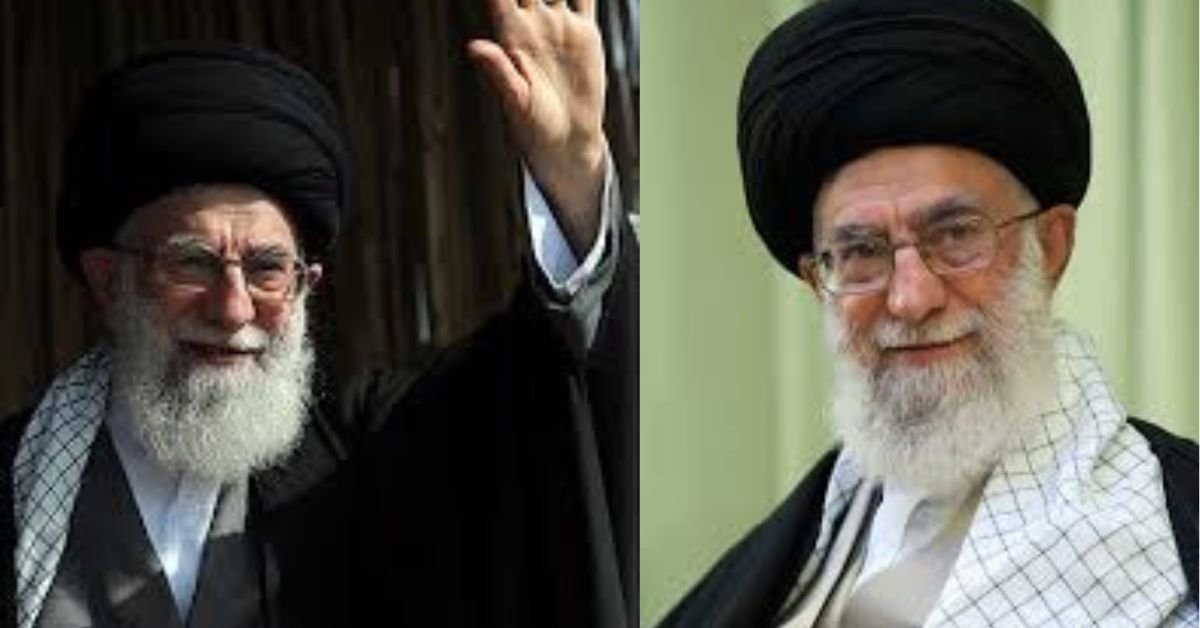
Ayatollah Ali Hosseini Khamenei born 19 April 1939 in Mashhad, Iran; died 28 February 2026 in Tehran was the second and longest-serving Supreme Leader of the Islamic Republic of Iran. He held that office for thirty-six and a half years, from June 1989 until his assassination in a joint United States-Israeli airstrike on 28 February 2026. A senior Shia cleric, politician, and the paramount authority over every branch of the Iranian state, Khamenei shaped the modern Middle East in ways few individuals of his era can match. His death has triggered an immediate succession crisis, a spiralling regional conflict, and profound uncertainty about the future of the Islamic Republic itself.
This article provides a comprehensive account of Khamenei’s life from his early years as a revolutionary cleric in Mashhad, through his presidency during the Iran-Iraq War, to his three and a half decades as Iran’s Rahbar (supreme leader) and a detailed analysis of the circumstances and consequences of his death.
Key Facts at a Glance
| Full Name | Ali Hosseini Khamenei |
| Born | 19 April 1939, Mashhad, Iran |
| Died | 28 February 2026, Tehran, Iran (assassinated) |
| Cause of Death | Airstrike joint US–Israeli operation (Operation Roaring Lion / Operation Epic Fury) |
| Title | Supreme Leader of Iran (Rahbar); Ayatollah; Sayyid |
| In Office | 4 June 1989 – 28 February 2026 (36 years, 269 days) |
| Predecessor | Ruhollah Khomeini |
| Also Served As | President of Iran, 1981–1989 |
| Survived By | Sons Mostafa and Masoud; son Mojtaba (also a potential successor candidate) |
Early Life and Path to the Revolution
Birth and Education in Mashhad
Ali Hosseini Khamenei was born on 19 April 1939 in Mashhad, the holy city in north-eastern Iran that houses the shrine of Imam Reza, the eighth Shia imam. He was born into a family of modest clerical background; his father, Javad Hosseini Khamenei, was an Azerbaijani Shia cleric, while his mother was of Persian descent. As one of eight children, he grew up in relative poverty. He later recalled that as a child, the family sometimes could not afford kerosene to heat their home.
He began his religious education known as hawza studies in Mashhad under local scholars. In 1958, at the age of nineteen, he travelled to the holy city of Qom, the pre-eminent centre of Shia Islamic scholarship in Iran. There, he enrolled in the advanced religious seminary and, crucially, began attending the lectures of Ayatollah Ruhollah Khomeini, a mid-ranking cleric who was beginning to emerge as a fierce critic of the Shah’s rule. That encounter between student and teacher would define the course of Iranian history.
Exile, Arrest, and Opposition to the Shah
Through the 1960s and 1970s, Khamenei became increasingly enmeshed in the underground opposition movement against Shah Mohammad Reza Pahlavi. He was arrested six times by SAVAK, the Shah’s feared secret police, and endured periods of imprisonment and internal exile. He was held in the harsh Evin prison and at Dezful and Birjand, among other locations. His time in detention, far from breaking him, deepened his revolutionary conviction.
He also spent time studying in Najaf, Iraq another major centre of Shia scholarship where he continued to absorb Khomeini’s doctrine of Wilayat al-Faqih (Guardianship of the Islamic Jurist), the concept that Shia clerics have both the right and the duty to govern Islamic society in the absence of the Hidden Imam. This framework would later become the constitutional bedrock of the Islamic Republic.
Role in the 1979 Iranian Revolution
By the late 1970s, Khamenei was a recognised figure in Khomeini’s inner circle, responsible for liaising between the exiled leader and revolutionary networks inside Iran. When mass protests brought the Shah’s regime to its knees in 1978 and 1979, Khamenei was among the key organisers. After Khomeini returned triumphantly to Tehran on 1 February 1979, Khamenei was appointed to the Revolutionary Council, the body that effectively governed Iran in the chaotic transition period. He was among those who took over the state broadcasting organisation, secured the loyalty of key military units, and helped draft the foundational institutions of the new Islamic Republic.
Rise to Power: From Cleric to President to Supreme Leader
The 1981 Assassination Attempt: A Defining Moment
On 27 June 1981, a bomb hidden inside a tape recorder exploded during a speech Khamenei was delivering at the Abu Dhar Mosque in Tehran. The explosion was carried out by the Mojahedin-e-Khalq (MEK), a group that had turned violently against the Islamic Republic. The blast severely damaged his vocal cords, collapsed one of his lungs, and permanently paralysed his right arm. He was thirty-two years old. That he survived at all was considered remarkable; the injuries he sustained left him speaking in a distinctive, slightly strained voice for the rest of his life, and he was never again able to use his right hand.
The attempt on his life occurred at one of the most violent moments of the Islamic Republic’s early existence the same summer in which both President Mohammad-Ali Rajai and Prime Minister Mohammad-Javad Bahonar were killed in a separate bombing. Khamenei’s survival, and his rapid return to public life, cemented his standing as a battle-hardened loyalist of the revolution.
Presidency During the Iran-Iraq War (1981–1989)
Khamenei was elected President of Iran in October 1981, a position he held until 1989. His two terms coincided almost entirely with the devastating Iran-Iraq War (1980–1988), in which Saddam Hussein’s Iraqi forces, with covert Western support, attacked Iran. Khamenei served as a key link between the civilian government and the military, visiting the front lines and working closely with the newly established Islamic Revolutionary Guard Corps (IRGC). His relationship with the IRGC during this period was foundational; the Guards’ commanders would remain his most important constituency for the rest of his life.
As president, Khamenei clashed repeatedly with Prime Minister Mir-Hossein Mousavi whom he regarded as too interventionist in the economy and was constrained by Khomeini himself, who sided with Mousavi on economic policy. These years taught Khamenei a lesson he would not forget: the presidency was not the apex of power. Influence lay with the Supreme Leader.
Succession After Khomeini (1989): An Unlikely Heir
When Khomeini died on 3 June 1989, the Islamic Republic faced its first existential test. The obvious successor, Grand Ayatollah Hossein-Ali Montazeri, had been sidelined months earlier after publicly criticising the mass executions of political prisoners and the regime’s direction. The Assembly of Experts, tasked with selecting a new Supreme Leader under the constitution, faced an awkward problem: no remaining candidate had the requisite rank of Grand Ayatollah and the political loyalty the moment demanded.
Khamenei still a mid-level cleric of the rank of Hojatoleslam was chosen. To make this constitutionally workable, the Assembly voted to retroactively elevate his clerical rank and, crucially, the constitution was simultaneously amended to remove the requirement that the Supreme Leader hold the Grand Ayatollah rank. His selection was widely seen within Iran’s senior clergy as politically expedient rather than religiously legitimate. As Ali Vaez of the International Crisis Group later observed, Khamenei himself understood this vulnerability intimately: he spent the next three decades systematically building the institutional power that would compensate for his lack of religious prestige.
The Khamenei Era: Domestic and Foreign Policy (1989–2026)
Consolidating Power: The Architecture of Supreme Authority
In the years following his accession, Khamenei moved methodically to concentrate power in the office of the Supreme Leader. He marginalised competing centres of authority including reformist presidents Akbar Hashemi Rafsanjani and Mohammad Khatami through a combination of constitutional manoeuvre, control of the judiciary and Guardian Council, and sustained cultivation of the IRGC as his personal enforcement arm.
The IRGC’s commercial empire spanning construction, oil, telecommunications, and finance expanded dramatically under Khamenei, creating a military-economic complex with strong incentives to preserve his rule. By the 2010s, the Guards controlled an estimated 20–40 per cent of Iran’s formal economy. In exchange, they provided Khamenei with an instrument of both domestic repression and regional power projection that no other Iranian leader had ever possessed.
Major Protests and Crackdowns
Khamenei’s rule was defined by a recurring cycle of popular protest and violent suppression. The 1999 student uprisings, sparked by the closure of a reformist newspaper, were met with attacks on dormitories by Basij paramilitaries. The 2009 Green Movement the largest protests since the revolution erupted after Khamenei intervened to secure victory for his preferred candidate Mahmoud Ahmadinejad in a widely condemned election; the subsequent crackdown left dozens dead and thousands imprisoned.
In September 2022, the death in custody of Mahsa Amini a 22-year-old Kurdish Iranian woman arrested by morality police for allegedly wearing her hijab improperly ignited the ‘Woman, Life, Freedom’ uprising, the most geographically widespread and politically radical protests of the Islamic Republic’s existence. The movement targeted not individual policies but the system itself, with protesters chanting directly against Khamenei. The regime’s response was characterised by mass arrests, internet shutdowns, live fire against demonstrators, and execution of those convicted of protest-related charges. By Khamenei’s own admission, in January 2026, several thousand people had died in the unrest.
Economic Policy and the ‘Energy Superpower’
Khamenei favoured economic privatisation of state-owned industries in principle, and Iran’s vast oil and gas reserves second only to Russia in natural gas, fourth in oil gave him the platform to pursue an ‘energy superpower’ vision. In practice, however, the privatisation process largely transferred assets from the state to IRGC-linked holding companies rather than to an independent private sector. Western sanctions tightened dramatically after Iran’s nuclear escalations progressively isolated Iran from global finance and technology. By the time of his death, Iran’s economy had been severely weakened: the rial had lost most of its value, youth unemployment was chronically high, and middle-class emigration had become a mass phenomenon.
Foreign Policy: Architect of the ‘Axis of Resistance’
If Khamenei’s domestic record was defined by repression and economic mismanagement, his foreign policy legacy is arguably more consequential for the wider region. He was the principal architect of the ‘Axis of Resistance’ a coalition of state and non-state actors aligned with Iran against the United States and Israel. Under his direction, Iran provided financial, military, and intelligence support to Hezbollah in Lebanon, Hamas in Gaza, Shia militias in Iraq and Syria, and the Houthi movement in Yemen. He also supplied Russia with drones for use in the Ukraine war.
Khamenei’s strategic logic, as articulated by analysts such as Ali Vaez, was one of ‘forward defence’: rather than waiting for an adversary to reach Iran’s borders, project power outward through proxies so that any conflict occurs far from home. For decades, the strategy appeared to work. The setbacks of 2023–2025 the Hamas attack on Israel on 7 October 2023, the subsequent Israeli campaign that decimated Hamas and Hezbollah leadership, and the Twelve-Day War between Iran and Israel in June 2025 shattered the deterrence architecture Khamenei had spent three decades building.
The Nuclear Programme
The Iranian nuclear programme was perhaps the single most consequential foreign policy issue of Khamenei’s tenure. He personally held veto power over all nuclear decisions, and his public posture combined a religious fatwa purportedly prohibiting nuclear weapons with steadfast refusal to halt uranium enrichment. The programme became a tool of strategic leverage: advanced enough to threaten a nuclear breakout, but never quite crossing the line that would provoke a decisive pre-emptive attack at least until 2025. Operation Midnight Hammer in June 2025 targeted and severely damaged three major Iranian nuclear facilities, reportedly setting the programme back by approximately two years.
Khamenei’s attitude to the United States was one of deep, ideologically grounded hostility, consistently framing the relationship in terms of civilisational struggle. He rejected or sabotaged multiple opportunities for a diplomatic accommodation most notably by undermining President Rouhani’s diplomacy around the 2015 Joint Comprehensive Plan of Action (JCPOA) and supporting President Trump’s framing after the US withdrew from the deal in 2018.
Antisemitism, Anti-Zionism, and the Conflict with Israel
Khamenei’s anti-Israel rhetoric was a consistent and central feature of his public persona. He called for the destruction of the Israeli state through referendum, denied the Holocaust in several speeches (though his foreign minister later said he had been mistranslated), and provided arms, training, and funding to every major Palestinian armed group. His rhetoric about Jews crossed into outright antisemitism, deploying conspiracy theories and what critics described as the language of medieval European anti-Jewish pogroms. Under his leadership, Iran hosted Holocaust-denial conferences and printed anti-Semitic cartoons in state media.

Death and Immediate Aftermath (February–March 2026)
The Assassination: 28 February 2026
On the morning of 28 February 2026, the United States and Israel launched a large-scale coordinated military operation known on the Israeli side as Operation Roaring Lion and on the American side as Operation Epic Fury against targets across Iran. The operation struck 24 of Iran’s 31 provinces, targeting nuclear facilities, missile production sites, air defence systems, and the command structures of the IRGC and the regular armed forces. In total, at least 201 people were killed across the country, according to the Iranian Red Crescent.
Among the targets was Khamenei’s official compound in Tehran. Satellite imagery published in the hours following the strikes showed severe damage to the building complex. An unnamed Israeli official stated that Khamenei’s body had been located and that documentation was shown to Prime Minister Benjamin Netanyahu. In the immediate aftermath, Iranian officials including Foreign Minister Abbas Araghchi and the Foreign Ministry spokesman insisted that Khamenei was ‘safe and sound’ and ‘steadfast and firm in commanding the field.’ Iranian news agencies Tasnim and Mehr maintained the denial for several hours.
Early on 1 March 2026, Iranian state broadcaster IRIB and the Supreme National Security Council officially confirmed that Khamenei had been killed in the strikes describing his death as ‘martyrdom.’ The government announced forty days of national mourning and a seven-day public holiday. The Fars News Agency, affiliated with the IRGC, reported that four members of Khamenei’s immediate family his daughter, son-in-law, grandchild, and daughter-in-law were also killed in the same strikes.
| CONTEXT: The killing represents only the second time in less than a century that the United States has acted to remove an Iranian head of state. The first was the CIA-backed coup in 1953 that overthrew the democratically elected Prime Minister Mohammad Mossadegh. That event and the decade of royal autocracy it enabled is the foundational grievance of the Islamic Republic’s anti-American narrative. |
Other Senior Officials Killed in the Strike
The 28 February strikes decapitated significant portions of Iran’s military and security leadership. Among the confirmed dead:
- Mohammad Pakpour Commander-in-Chief of the Islamic Revolutionary Guard Corps, the second time in less than twelve months that Israel had killed an IRGC commander-in-chief.
- Ali Shamkhani Khamenei’s top national security adviser and former secretary of the Supreme National Security Council, described as one of his most trusted aides.
- Aziz Nasirzadeh Senior air force commander.
- Several other IRGC and regular military general officers, totalling approximately seven confirmed senior security figures, with reports suggesting up to thirty top commanders were targeted.
Civilian Reaction: Mourning and Celebration
The popular reaction within Iran was sharply divided and historically revealing. In cities with large populations of religious conservatives including around the Imam Reza shrine in Mashhad crowds gathered in mourning, weeping in the streets and holding portraits of the late Supreme Leader. State media broadcast scenes of grief and organised funeral processions.
Simultaneously, in other parts of Tehran and in cities including Isfahan, Karaj, Kermanshah, Qazvin, Sanandaj, and Shiraz, witnesses reported cheers, celebratory music played from apartment windows, car horns, and street celebrations. Videos circulating on social media showed Iranian women dancing and removing their headscarves in public. The reaction offered a vivid snapshot of the deep social fracture that had grown under Khamenei’s rule particularly following the Mahsa Amini protests.
The Succession Crisis: Who Will Lead Iran?
The Constitutional Process
Under Article 111 of the Iranian Constitution, when the office of Supreme Leader falls vacant, a temporary leadership council immediately assumes state duties. That council consists of three members: the President, the head of the judiciary, and a jurist elected from among the members of the Guardian Council. They hold power until the Assembly of Experts an eighty-eight-member body of senior clerics elected by the public convenes to select a new permanent Supreme Leader.
On 1 March 2026, Iran announced the composition of the interim council: President Masoud Pezeshkian; Supreme Court Chief Justice Gholam-Hossein Mohseni-Ejei; and Ayatollah Alireza Arafi, a member of the Guardian Council appointed as the jurist representative. The council’s formation was confirmed by the Expediency Council.
Ali Larijani a former parliament speaker, ex-IRGC officer, and the most senior civilian official to have survived the strikes emerged in the hours after Khamenei’s death as the de facto co-ordinator of the regime’s response. He appeared in public on 1 March to declare that Iran’s transition was ‘underway’ and that the country would deliver an ‘unforgettable lesson’ to the United States and Israel. According to reports in The New York Times, Khamenei himself had, in anticipation of exactly this scenario, elevated Larijani to manage crisis succession in the event of a decapitation strike.
Potential Candidates for the New Supreme Leader
The Assembly of Experts has examined potential candidates in secrecy and without public announcement. Prior to his death, Khamenei had reportedly nominated three senior clerics as possible successors: Gholam-Hossein Mohseni-Ejei (now serving on the interim council), Asghar Hejazi, and Hassan Khomeini. The following table summarises the major candidates as assessed by analysts and reported by intelligence services:
| Candidate | Background | Strengths | Challenges |
| Mojtaba Khamenei | Second son of the late Supreme Leader; influential in IRGC and Basij circles | IRGC loyalty; family continuity | Dynastic succession is deeply unpopular; lacks senior clerical rank; reportedly opposed by father himself |
| Alireza Arafi | Deputy chairman of Assembly of Experts; head of Iran’s seminary system; now on interim council | Institutional trust; named by father; tech-savvy and multilingual | Not a political heavyweight; limited security establishment ties |
| Hassan Khomeini | Grandson of Islamic Republic founder Ruhollah Khomeini | Immense symbolic and religious legitimacy | Seen as less hardline; barred from Assembly of Experts in 2016; outsider to power structures |
| Ali Larijani | Former parliament speaker; ex-IRGC; Secretary of Supreme National Security Council | Pragmatic; deep establishment ties; already governing in crisis | Not a senior cleric; secular profile may be disqualifying |
| Mohammad-Mahdi Mirbagheri | Hardline cleric; Assembly of Experts member | Ideological purity; conservative support | Extreme views risk further international isolation |
| Sadiq Larijani | Ali Larijani’s brother; former judiciary chief; senior cleric | Religious credentials; institutional experience | Seen as deeply corrupt by reform circles; widely unpopular |
Analysts at the International Crisis Group, the Stimson Center, and the Middle East Institute broadly agree on three possible succession scenarios. First, a rapid consensus appointment of a single candidate who satisfies both the clerical establishment and the IRGC the most stabilising outcome. Second, a prolonged factional struggle within the Assembly of Experts, possibly producing a compromise council rather than a single leader. Third, an effective takeover by the IRGC, which would transform Iran into a security state with clerical legitimacy as a veneer a trajectory the CIA, in its pre-strike assessments, identified as the most probable outcome.
Global Repercussions: A Region on the Brink
Military Escalation
Iran’s retaliatory response was swift and multi-directional. In the hours following the strikes, Iranian ballistic missiles struck Tel Aviv, killing at least one person a woman in her forties who had been critically wounded and wounding dozens of others. Drone attacks were launched towards Bahrain, where the US Fifth Fleet is based, and against targets in the wider Gulf region. An oil tanker was reportedly attacked in the Gulf of Oman. The IRGC’s deputy chief Ahmad Vahidi, rapidly elevated following Pakpour’s death, signalled that further strikes would follow until Iran’s ‘unforgettable lesson’ had been delivered.
In Baghdad, Shia protesters attempted to storm the US embassy near the Green Zone, confronting Iraqi security forces and blocking roads. Iraqi Shia leader Muqtada al-Sadr expressed public grief over Khamenei’s death. Pakistan’s Shia community staged protests in Lahore. The Lebanese border saw drone interceptions, and Hezbollah newly weakened from the previous year’s conflict announced mourning for the ‘martyr.’
International Reactions
| Country / Entity | Reaction | Key Statement |
| United States (Trump) | Celebratory | Called Khamenei ‘one of the most evil people in History’; said his killing was ‘justice’; urged Iranians to rise up against the government |
| Israel (Netanyahu) | Celebratory | Said Khamenei’s killing would ‘make true peace possible’; confirmed strikes had decimated Iran’s chain of command |
| Argentina (Milei) | Strongly positive | Praised the ‘elimination’ of Khamenei; blamed him for the 1994 AMIA bombing in Buenos Aires |
| Exiled Crown Prince Reza Pahlavi | Celebratory | Called Khamenei ‘the bloodthirsty Zahhak of our time’; urged security forces to join the people |
| Iraq (Al-Sadr) | Mourning | Expressed ‘sadness and sorrow’; condemned the strikes |
| Hezbollah (Lebanon) | Mourning | Declared mourning for the ‘martyr’; threatened retaliation |
| Pakistan (government) | Condemnation | Condemned the strikes; large Shia protests in Lahore |
| Iran (Pezeshkian) | Condemnation | Described Khamenei’s killing as a ‘great crime’; vowed it would not go unanswered |
Impact on Travel and Global Economy
The strikes and subsequent Iranian retaliatory missile fire prompted immediate disruptions to international aviation and global energy markets. The UK Foreign Office issued an urgent travel advisory warning British nationals against all travel to Iran and to exercise heightened caution in the Gulf region. Several countries closed their airspace over Iran, leading to widespread flight cancellations and diversions across routes connecting Europe, Central Asia, and East Asia. Oil futures rose sharply on global markets in response to the escalation in the world’s most energy-sensitive region.
Personal Life and Public Persona
Khamenei was married to Mansoureh Khojasteh-Bagherzadeh and had six children: three sons Mojtaba, Mostafa, and Masoud and three daughters. Of these, Mojtaba was the most politically prominent, widely believed to have been a candidate for succession and a figure of significant influence within the IRGC and Basij. Mostafa and Masoud maintained lower public profiles. Three of Khamenei’s children his daughter, son-in-law, and a grandchild were killed alongside him in the 28 February strikes.
Despite his image as a hardline ideologue, Khamenei had a well-documented passion for literature, music, and poetry. He was an avid reader of Persian classical poetry, particularly Hafez and Rumi, wrote his own verse, and had translated books from Arabic into Persian. He was also reportedly fond of traditional Iranian music, a slightly incongruous interest given his government’s periodic crackdowns on public musical performance. His published memoirs and speeches revealed a man who saw himself in deeply historical terms as a guardian of civilisational Islam against Western cultural imperialism.
The Enduring Legacy of Ali Khamenei
How history will judge Ali Khamenei depends on who is doing the judging. For the Islamic Republic’s supporters, he was the Rahbar who preserved the revolution through four decades of existential pressure wars, sanctions, coups plots, and popular uprisings and who built Iran into a genuine regional power with a nuclear near-threshold capability, a continent-spanning network of proxies, and a seat at the tables of global geopolitics that no Iranian leader before or since has matched.
For his millions of domestic critics and for the many Iranians who celebrated in the streets as news of his death spread his legacy is one of systematic repression, economic ruin, and squandered national potential. He presided over the execution of political prisoners, the torture of journalists and activists, the killing of protesters, and the forced exile of much of Iran’s educated class. He chose ideological purity over national development and the interests of a clerical-military oligarchy over the wellbeing of ordinary Iranians.
On the regional and global stage, he is likely to be remembered as the man who built the ‘Axis of Resistance’ who kept the Palestinian cause militarily alive through Hamas and Hezbollah when it might otherwise have collapsed, who forced the United States into costly confrontations across the Middle East, and who brought Iran to the edge of the nuclear threshold. Whether that constitutes strategic genius or reckless brinkmanship that ultimately brought destruction upon his own people and his own family is a judgement that history has barely begun to form.
What is not in dispute is the scale of the disruption his death has produced. Khamenei was the Islamic Republic’s gravitational centre the figure around whom every other institution, faction, and power calculation orbited. His removal has not ended the Islamic Republic. But it has forced the question: can it survive the weight of what it has become?
Frequently Asked Questions
How did Ali Khamenei die?
Ali Khamenei was killed on 28 February 2026 in a joint airstrike by the United States and Israel. His compound in Tehran was struck during Operation Roaring Lion / Operation Epic Fury, a large-scale military operation targeting nuclear facilities, missile sites, and senior leadership. Iranian state media confirmed his death early on 1 March 2026.
Who is leading Iran now?
An interim three-member leadership council consisting of President Masoud Pezeshkian, Chief Justice Gholam-Hossein Mohseni-Ejei, and cleric Alireza Arafi is currently governing Iran under Article 111 of the constitution. The Assembly of Experts, an eighty-eight-member clerical body, is expected to convene to elect a permanent new Supreme Leader. No successor has been officially named as of 1 March 2026.
What is the Assembly of Experts?
The Assembly of Experts is an eighty-eight-member body of senior Islamic clerics elected by the Iranian public every eight years. Its principal constitutional functions are to select the Supreme Leader and to supervise his conduct in office. The Assembly’s current session began in 2024 and is scheduled to sit until 2032. In practice, candidates must first be approved by the Guardian Council itself partly appointed by the Supreme Leader making the selection process an internal regime affair.
Why was Khamenei assassinated?
The United States and Israel stated that the operation was intended to halt Iran’s nuclear weapons programme, destroy its ballistic missile infrastructure, and initiate regime change. President Trump publicly called for the Iranian people to overthrow their government in the wake of the strikes. The operation came after years of escalating conflict, including the Twelve-Day War in June 2025 and sustained US-Israeli strikes on Iranian proxy forces.
What was Khamenei’s relationship with the United States like?
Khamenei regarded the United States as the ‘Great Satan’ the principal external enemy of the Islamic Republic and this view was not merely rhetorical but shaped every major foreign policy decision of his tenure. He presided over Iranian support for attacks on US forces in Iraq and Syria, the development of a missile programme capable of striking US bases across the Middle East, and a sustained effort to replace US influence in the region with Iranian-led alternatives.
Did Khamenei support Hamas and Hezbollah?
Yes. Support for Hamas in Gaza and Hezbollah in Lebanon was a cornerstone of Khamenei’s ‘Axis of Resistance’ strategy. Iran provided both organisations with funding, weapons, training, and intelligence. Hezbollah, in particular, was widely described as Iran’s most capable proxy a state-within-a-state in Lebanon with a missile arsenal that, prior to its decimation in the 2024–2025 conflict, posed a significant strategic deterrent against Israel.
What were the major protests during Khamenei’s rule?
Major protests included: the 1999 student uprisings; the 2009 Green Movement, which erupted after a stolen presidential election; the 2017–18 economic protests; the 2019–20 protests over petrol price increases, during which the government shut down the internet and killed hundreds; the 2022 ‘Woman, Life, Freedom’ movement triggered by Mahsa Amini’s death in custody; and the 2025–26 protests that continued until weeks before his death. Khamenei personally acknowledged in January 2026 that several thousand people had died in the 2025–26 unrest alone.
How old was Khamenei when he died?
Ali Khamenei was eighty-six years old at the time of his death on 28 February 2026. He had been born on 19 April 1939 and would have turned eighty-seven in April 2026.
What did Donald Trump say about Khamenei’s death?
President Trump celebrated the killing on his Truth Social platform, calling Khamenei ‘one of the most evil people in History’ and describing his death as ‘justice’ for Americans and others killed by Iranian-backed forces over the decades. Trump appeared to confirm US involvement in the operation and called on the Iranian people to use the moment to ‘take back their country.’ He stated the strikes would continue ‘until peace is secured.’
Sources & Further Reading
This article draws on reporting from Al Jazeera, CNN, BBC News, NPR, Reuters, The Times of Israel, Axios, The National, Gulf News, The Week India, Wikipedia, and analysis from the Stimson Center, the Middle East Institute, and the International Crisis Group. It will be updated as the situation in Iran develops.
DISCLAIMER: This is a rapidly developing situation. While every effort has been made to verify facts at the time of publication (1 March 2026), some details may change as more information becomes available.

EroThots (primarily at domains like erothots.co, erothots1.com, or erothots.is) is a free adult tube-style site specializing in leaked and aggregated content from OnlyFans, Fansly, Reddit, and similar subscription platforms. It hosts videos, images, gifs, and clips featuring OnlyFans models, pornstars, and amateur creators. In 2026, with OnlyFans still dominant and piracy concerns growing, sites like this remain popular for zero-cost access but come with real trade-offs in quality, legality, and security.
We’ll walk through what the platform offers, how it operates, the types of content, privacy and legal realities, comparisons to official sources, common myths, and practical advice. No judgment, just clear details so you can decide for yourself.
What Is EroThots?
EroThots functions as a large aggregator and hosting site for adult material that originates elsewhere. Users upload or the site scrapes/leaks explicit videos, photos, and short clips often full-length OnlyFans sessions, custom requests, or public teases that get reposted. It emphasizes “leaked” content from popular creators, with categories covering everything from solo performances to hardcore scenes.
The site keeps things simple: search by model name, keyword (e.g., “onlyfans girls,” specific performers), or tags. No mandatory account for basic browsing, though ads and pop-ups are common. It includes sections for videos, image albums, and sometimes gifs or AI-generated porn teasers.
Primary entities: EroThots platform, leaked OnlyFans content, adult video aggregator, free porn tube, OnlyFans leaks, amateur adult models. Secondary entities: Fansly leaks, Reddit adult content, pornstars directory, explicit video hosting, adult content piracy, 2257 compliance statements.
Related keywords and long-tail terms: erothots.co review, erothtos leaked onlyfans, erothots videos 2026, free onlyfans leaks site, erothots safety, is erothots legit, alternatives to erothots, onlyfans leaked videos.
How EroThots Works and What You’ll Find
The platform operates like many free adult tubes: content gets indexed or mirrored quickly after it appears on paid services. Popular searches pull up high-view clips from trending creators, with thumbnails, durations, and basic metadata. Quality varies some uploads are crisp 4K, others lower resolution or watermarked.
Bullet-proof list of typical content types:
- Full or partial OnlyFans videos (solo, boy/girl, fetish)
- Photo sets and albums from subscription pages
- Short clips and gifs for quick viewing
- Leaked custom content or “PPV” (pay-per-view) material
- Occasional live stream recordings or Reddit-sourced posts
Navigation relies on search and category browsing. The site claims 2257 compliance (U.S. record-keeping for adult performers) and has report functions, but enforcement on piracy remains limited.
Safety, Legality, and Practical Concerns in 2026
Browsing EroThots exposes you to heavy advertising, potential malware risks from pop-ups, and trackers. While some trust checkers rate the main domains as “likely safe” for basic access, adult sites in general carry higher chances of redirects or unwanted downloads. Use ad blockers, updated browsers, and avoid clicking suspicious links.
Legally, the core issue is unauthorized distribution. Much of the “leaked” material violates creators’ copyrights and terms of service on OnlyFans and similar platforms. Downloading or sharing can lead to account bans, legal notices, or worse in extreme cases. Creators frequently complain about their paid work appearing free elsewhere, hurting their income.
Comparison Table: EroThots vs Official Subscription Platforms
| Aspect | EroThots (Free Leaks) | OnlyFans / Fansly (Paid) |
|---|---|---|
| Cost | Free | Subscription or PPV fees |
| Content Freshness | Often delayed or partial leaks | Immediate, full access for subscribers |
| Quality & Completeness | Variable, sometimes edited or low-res | Creator-controlled, higher consistency |
| Creator Support | None (harms earnings) | Direct revenue for models |
| Safety & Privacy | Higher ad/malware risk, tracking | Better controls, but still platform data collection |
| Legal/Ethical | Piracy concerns | Authorized, consensual |
Paid platforms win on ethics and reliability; free aggregators win on zero upfront cost but lose on everything else.
Myth vs Fact
Myth: Everything on EroThots is completely free and safe to download. Fact: “Free” often means ad-supported with risks, and downloads can include malware or expose your device. Plus, the content itself may be stolen.
Myth: Leaked OnlyFans sites like EroThots don’t hurt creators. Fact: They directly cut into subscription revenue. Many models report lost income and increased harassment when private content leaks.
Myth: These sites are official partners or mirrors of OnlyFans. Fact: They have no affiliation. OnlyFans actively fights leaks and can ban accounts involved in distribution.
Myth: Using an ad blocker makes EroThots risk-free. Fact: It reduces some dangers but doesn’t eliminate tracking, potential zero-day exploits, or the legal gray area of consuming pirated material.
Statistical Proof and Broader Context
Adult content consumption stays massive, with free tube sites and leak aggregators drawing tens of millions of monthly visitors. EroThots variants reportedly pull significant U.S. traffic. Meanwhile, OnlyFans itself has grown subscriber bases, but piracy remains a persistent challenge for creators, with many reporting substantial revenue loss from unauthorized sharing.
AI-generated adult content has also surged, and some leak sites now mix in or promote it alongside real leaks.
EEAT Reinforcement: Insights from Observing Adult Content Trends
Having followed the adult industry and digital content platforms through shifts from tube sites to subscription models and now AI influences, one lesson repeats: the “free” options almost always come with hidden costs whether lost creator income, security headaches, or lower satisfaction over time. A common mistake? Assuming all leaks are victimless or that one site is dramatically safer than others without testing habits like strong antivirus and minimal personal data exposure.
EroThots fits the classic aggregator mold: convenient for casual browsing but rarely the best long-term choice. Real-world experience shows that supporting creators directly often yields better content, community, and peace of mind. No single site review replaces your own risk assessment check recent user feedback on forums, use VPNs if privacy matters, and remember that platforms evolve (domains shift, content gets removed).
FAQs
What is EroThots exactly?
EroThots is a free adult website that aggregates and hosts leaked videos, photos, and clips primarily from OnlyFans and similar subscription services. It allows browsing explicit content without payment, focusing on amateur models and pornstars.
Is EroThots safe to use?
It carries typical risks of free adult sites: intrusive ads, potential malware from pop-ups, and tracking. Some checkers rate the domains as low-to-medium risk, but using ad blockers, antivirus, and avoiding downloads improves safety. Never enter personal info.
Is using EroThots legal?
Consuming leaked content often involves copyrighted material distributed without permission, raising legal and ethical issues. While prosecution for viewers is rare, it violates platform terms and harms creators. Stick to authorized sources for fewer worries.
Does EroThots have official OnlyFans content?
It specializes in unauthorized leaks and reposts. Official OnlyFans material is only available through paid subscriptions on the actual platform.
What are good alternatives to EroThots?
Paid options like OnlyFans, Fansly, or ManyVids give direct creator support and full access. For free legal content, try mainstream tubes with original uploads or creator teasers. For ethical free viewing, seek public social media posts from models.
Why do people search for “erothtos”?
It’s a common misspelling or shorthand for EroThots when looking for free leaked OnlyFans videos and adult images. High search volume reflects demand for no-cost explicit material.
Conclusion
EroThots revolves around key entities: leaked OnlyFans and amateur adult content, free video and image aggregation, piracy-driven adult tubes, creator impacts, and the ongoing tension between free access and paid platforms.
The adult content landscape in 2026 keeps shifting with stronger creator tools, AI generation, and crackdowns on unauthorized sharing. What doesn’t change is the value of informed choices balancing convenience against real risks and ethics.
Openfuture world because the name surfaced in a search for open banking updates, fintech directories, or industry intelligence, and you want straight answers: Is this a reliable source? What does it actually offer? And does it help cut through the noise in a fast-moving sector?
Your deeper need is practical finding a centralized place to track real progress in open banking and open finance without wading through hype, scattered news, or outdated lists. OpenFuture.World (openfuture.world) positions itself as the largest global source of information on advancements in open banking and beyond. In 2026, with open finance expanding rapidly across regions like Europe, the UK, Brazil, and Asia, having one hub for directories, curated news, and connections feels increasingly valuable.
What Is OpenFuture.World?
OpenFuture.World serves as a dedicated knowledge hub and directory focused on open banking, open finance, and related innovations. It aggregates and curates information to help users discover companies, track news, find events, and connect with peers in the sector.
Unlike a single fintech product or bank API, it functions as an intelligence platform. It highlights “who’s who” and “what’s worth paying attention to” through free resources: a searchable business directory with thousands of entries, daily news curation, articles, presentations, and event listings.
The site emphasizes progress in secure data sharing, third-party provider integration, and innovative financial services enabled by open standards. It covers both regulated entities and emerging players, making it useful for developers, banks, fintech founders, and analysts.
Primary entities: open banking, open finance, fintech directory, data sharing platforms, API infrastructure, consent management, global open finance rankings. Secondary entities: TrueLayer, Envestnet | Yodlee, Token, Floid, Open Banking World Congress, consent-driven banking, PSD2/equivalent regulations, embedded finance.
Related keywords and long-tail terms: openfuture.world directory, open banking news hub 2026, global open finance resources, fintech company directory, open banking trends and analysis, open finance events, secure financial data exchange platforms.
Core Features and How It Works
The platform stands out for its focused, no-frills approach to sector intelligence:
- Business Directory: A searchable database of organizations involved in open banking and finance. Entries include profiles on companies like TrueLayer (financial infrastructure), Envestnet | Yodlee (data aggregation), and Token (banking-enabled commerce). Users browse or search for prospects, partners, or competitive intelligence.
- Curated News and Articles: Daily or regular updates on developments, from regulatory shifts to new product launches and cybersecurity lessons.
- Events and Congress: Listings and details for gatherings like the Open Banking World Congress, designed for efficient networking and insights.
- Rankings and Analysis: Periodic global or thematic rankings that spotlight leading organizations, countries, and individuals driving progress.
Bullet-proof list of practical uses:
- Quickly find and evaluate potential partners or vendors in open banking APIs.
- Stay updated on cross-border developments without following dozens of sources.
- Discover emerging players in data analytics, consent management, or embedded finance.
- Prepare for events or pitches with background on key companies.
- Track broader themes like AI agents in payments or blockchain for consent.
The content tone leans professional and forward-looking, aimed at industry insiders who need actionable intelligence rather than consumer-facing explanations.
Open Banking and Open Finance Context in 2026
Open banking enables secure sharing of financial data with authorized third parties via APIs, with user consent at the center. Open finance extends this to insurance, investments, pensions, and more. In 2026, adoption varies: Brazil leads with high consumer uptake tied to instant payments, while Europe and the UK refine post-PSD2 frameworks, and other regions build foundational infrastructure.
OpenFuture.World tracks this uneven global progress, highlighting successes in personalized services, competition that benefits consumers, and challenges around trust, security, and interoperability.
Comparison Table: OpenFuture.World
| Aspect | OpenFuture.World | General News Sites (e.g., Finextra, TechCrunch) | Broader Directories (e.g., Crunchbase) |
|---|---|---|---|
| Focus | Deep open banking & open finance | Broad fintech and tech | All startups and funding |
| Directory Depth | Specialized profiles and links | Limited or none | Wide but less sector-specific |
| Content Style | Curated, analytical | Fast-breaking news | Company data and metrics |
| Free Access | Strong emphasis on free resources | Often ad-supported or paywalled | Basic free, premium for details |
| Best For | Industry professionals and researchers | General awareness | Investment scouting |
This hub shines when you need targeted, sector-specific depth rather than volume.
Myth vs Fact
Myth: OpenFuture.World is a fintech platform or bank service where you can directly access open banking APIs. Fact: It is an information and discovery hub, not a technical infrastructure provider. Use it to learn about and connect with actual API builders like TrueLayer or Yodlee.
Myth: All open banking directories are basically the same. Fact: Specialization matters. OpenFuture.World emphasizes global progress, rankings, and curated insights tailored to open finance, which sets it apart from generic startup lists.
Myth: Open finance is only relevant in Europe due to PSD2. Fact: Momentum is global. Regions like Brazil show strong consumer adoption, and many markets are implementing or expanding similar frameworks in 2026.
Myth: These hubs just republish press releases with no real value. Fact: Quality curation and targeted directories save significant research time, especially when tracking thousands of organizations across borders.
Statistical Proof and Market Context
Open finance continues expanding. Consumer willingness to share data for better experiences remains high, with reports indicating significant potential shifts in financial services value. Cybersecurity incidents in fintech stayed prominent in 2025, underscoring the need for robust consent and security practices that many directory-listed companies address.
Directories like this help navigate a landscape with thousands of players, from established data aggregators to innovative consent management solutions using blockchain or AI.
EEAT Reinforcement: Insights from Following Fintech Intelligence Platforms
Having tracked open banking developments since the early PSD2 days through multiple regulatory cycles and regional rollouts, one pattern stands clear: professionals who succeed fastest combine technical knowledge with strong ecosystem awareness. A common mistake? Relying solely on broad news feeds and missing nuanced, sector-specific signals on who is actually shipping usable infrastructure.
OpenFuture.World fills that gap with its focused directory and curation. It isn’t perfect no single hub captures every development but its emphasis on free access and global scope makes it a solid starting point. From evaluating similar resources over the years, the most useful ones prioritize transparency (clear about being informational, not advisory) and freshness. Always cross-reference directory entries with official company sites and recent regulatory filings for the fullest picture.
FAQs
What exactly is OpenFuture.World?
OpenFuture.World is a global knowledge hub and directory dedicated to open banking and open finance. It offers a searchable database of companies, curated news, articles, event information, and rankings to help professionals track progress and make connections in the sector.
Is OpenFuture.World an official platform or a news site?
It functions primarily as an independent information hub rather than an official regulatory body or technical API platform. It curates content and maintains a directory to support discovery and learning across the open finance ecosystem.
What can I find in the OpenFuture.World directory?
You’ll discover profiles of fintech companies, data aggregators, API providers, and other organizations involved in open banking. Examples include TrueLayer, Envestnet | Yodlee, and Token, with details to help identify potential partners or understand market players.
How does OpenFuture.World help with open banking trends in 2026?
It surfaces daily news, analysis, and events focused on data sharing, consent management, regulatory updates, and innovations like AI in payments. This keeps users informed on global developments without needing to monitor dozens of separate sources.
Is the content on OpenFuture.World free to access?
Yes, the platform emphasizes free resources including the directory, news, and basic event information. This approach aims to lower barriers for discovering and engaging with the open finance community.
Who should use OpenFuture.World?
Fintech professionals, bank innovation teams, developers building financial applications, analysts, and anyone needing reliable intelligence on open banking and open finance advancements benefit most from its focused resources.
Conclusion
OpenFuture.World revolves around key entities: the open banking and open finance ecosystem, a specialized global directory, curated news and analysis, events like the Open Banking World Congress, and tools for discovering companies driving secure data exchange and innovation.
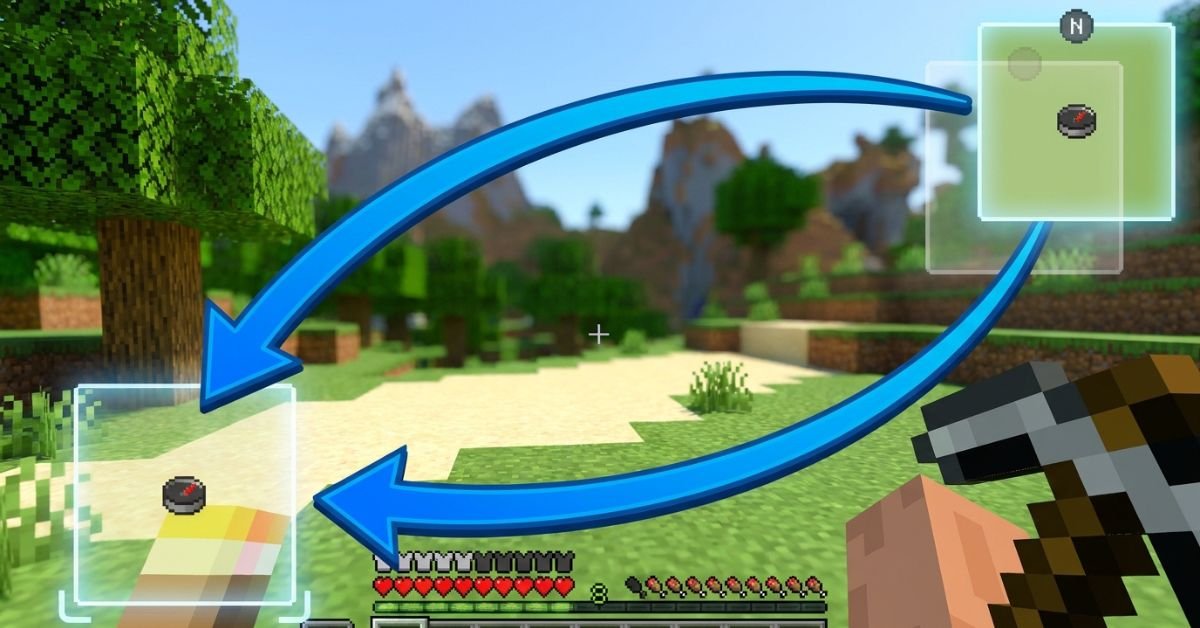
JourneyMap minimap sits stubbornly in the top right, blocking your hotbar or clashing with other HUD mods, and you just want it moved without breaking anything.
JourneyMap remains one of the most popular and powerful minimap mods for Minecraft Java Edition. It gives you a live radar-style minimap, full-screen mapping, waypoints, cave mapping, and deep customization. In 2026, with Minecraft 1.21+ and newer Fabric/Forge versions, the minimap positioning system is more flexible than ever, including true custom dragging.
Understanding JourneyMap’s Minimap System
JourneyMap displays a small, real-time map in one corner of your screen by default (usually top right). It shows terrain, mobs, players, waypoints, and info like coordinates or biome.
The mod supports two independent minimap presets. Each preset can have its own position, style (square/circular), zoom, displayed elements, and opacity. Switch between them instantly with a single keypress.
Key hotkeys you’ll use often:
- J Open full-screen map (and access settings from there)
- Ctrl + J Toggle minimap visibility
- ** (backslash) Switch between minimap presets
- = / – Zoom minimap in/out
- [ Cycle map types (terrain, cave, etc.)
Position options include: Top Right, Bottom Right, Bottom Left, Top Left, Top Center, Center, and Custom.
Step-by-Step: How to Change Minimap Position
Method 1: Quick Preset Changes (Easiest for Most Players)
- Press J to open the full-screen map.
- Click the Settings icon (gear) at the bottom, or press O.
- Navigate to Minimap (or Minimap Preset 1 / Preset 2).
- Find the Position dropdown.
- Choose from Top Right, Bottom Right, Bottom Left, Top Left, Top Center, or Center.
- Close the menu changes apply immediately.
You can configure Preset 1 and Preset 2 differently, then switch live with the ** key. This lets you have one clean minimap for exploration and another packed with info for building or PvP.
Method 2: True Custom Position (Drag Anywhere)
- Open full-screen map with J → Settings.
- Set Position to Custom.
- Return to the game world.
- Hold the configured move key (or use arrow keys) to drag the minimap freely.
- Fine-tune with the Minimap Key Move Pixel Offset setting (default 0.001) for precise pixel-level control.
Custom mode gives you pixel-perfect placement anywhere on screen perfect when other mods clutter the corners.
Method 3: In-Game Adjustments and Hotkeys
Some players prefer direct controls:
- Open settings via full-screen map for full access.
- Adjust related options like opacity, shape, info slots, and what displays (waypoints, players, mobs, light level, etc.).
Pro tip: After moving, test in different situations underground caves, dense forests, or with shaders active because render layers can shift slightly.
Comparison: Position Options in JourneyMap (2026)
| Position Option | Best For | Flexibility | Easy to Switch? | Notes |
|---|---|---|---|---|
| Top Right (Default) | Standard clean HUD | Low | Yes | Classic placement, rarely overlaps hotbar |
| Bottom Right | When top is crowded | Low | Yes | Good with action bars on left |
| Bottom Left | Players who read left-to-right | Low | Yes | Common with inventory-focused mods |
| Top Left | Minimal interference | Low | Yes | Avoid if you have chat or notifications |
| Top Center / Center | Dramatic or centered builds | Medium | Yes | Can feel intrusive during combat |
| Custom | Perfect personal HUD | Highest | Moderate | Drag freely + pixel offset tuning |
Custom wins for most experienced players once you spend five minutes setting it up.
Myth vs Fact
Myth: You can only put the minimap in the four corners. Fact: JourneyMap supports Top Center, Center, and full Custom drag mode for anywhere on screen.
Myth: Changing position requires editing config files manually. Fact: Everything is done in-game through the settings menu or hotkeys no file editing needed in recent versions.
Myth: The minimap resets position every time you restart Minecraft. Fact: Settings save per world/profile as long as you close the game properly.
Myth: Custom position only works with certain Minecraft versions. Fact: As of 2026 versions (1.21+), Custom drag and presets work reliably on Fabric, Forge, and NeoForge.
Real-World Insights From Years of Modded Play
After running JourneyMap in hundreds of modpacks across different Minecraft versions from 1.16 through 1.21+, the biggest mistake I see is players fighting the default top-right position instead of using the two presets properly. One preset for a minimal radar during exploration, another fully loaded for base building or resource hunting switching with feels like night and day.
Another common issue: conflicts with shader packs or other HUD mods (like AppleSkin or inventory tweaks). Setting Position to Custom and nudging it a few pixels usually solves overlap instantly. In 2025–2026 testing, the in-game settings menu has become even more responsive, with changes applying without needing a relog.
FAQs
How do I move the JourneyMap minimap to a different corner?
Press J to open the full map, click Settings (or press O), go to Minimap settings, and change the Position dropdown to Bottom Right, Top Left, or any preset option. Changes apply live.
Can I drag the JourneyMap minimap anywhere on screen?
Yes. Set Position to Custom in the settings menu, then use arrow keys or the move control to drag it freely. Adjust the pixel offset for finer control.
How do I switch between two different minimap presets?
The default key is ** (backslash). Configure Preset 1 and Preset 2 separately with different positions, sizes, or displayed info, then switch on the fly.
Why can’t I move my JourneyMap minimap?
Make sure you’re not in a conflicting mod setup (like certain VR mods). Try setting Position to Custom, or check that the minimap isn’t disabled. Restarting the game or updating JourneyMap often fixes stubborn cases.
Does changing minimap position affect performance?
Position changes are purely visual and have zero impact on FPS. Adjust opacity or disable heavy features (like high-quality cave mapping) if you need performance gains instead.
Is there a way to completely hide or disable the minimap?
Yes use Ctrl + J to toggle it off quickly, or turn off “Show Minimap” in the settings for a permanent change.
Conclusion
Changing the minimap position in JourneyMap comes down to understanding presets, the Position dropdown, and Custom drag mode. The core entities minimap presets, position options (corners + custom), hotkeys like J and , and in-game settings menu give you full control over how the mod fits your playstyle.
-

 ENTERTAINMENT11 months ago
Tesla Trip Planner: Your Ultimate Route and Charging Guide
-

 TECHNOLOGY11 months ago
FaceTime Alternatives: How to Video Chat on Android
-

 BLOG11 months ago
Camel Toe Explained: Fashion Faux Pas or Body Positivity?
-

 BUSNIESS11 months ago
Careers with Impact: Jobs at the Australian Services Union
-
 BLOG11 months ago
Jalalabad India: A Hidden Gem of Punjab’s Heartland
-

 FASHION11 months ago
Wrist Wonders: Handcrafted Bracelet Boutique
-

 BUSNIESS10 months ago
Chief Experience Officer: Powerful Driver of Success
-

 ENTERTAINMENT11 months ago
Centennial Park Taylor Swift: Where Lyrics and Nashville Dreams Meet