
BLOG
Speciering: The Evolutionary Process of Species Formation


Speciering a term synonymous with speciation is one of the most fundamental processes in evolutionary biology. First coined by biologist Orator F. Cook in 1906, the word describes the evolutionary mechanism by which populations diverge and give rise to new, distinct species. It is the engine behind Earth’s extraordinary biodiversity and underpins everything from conservation science to medicine. This guide explores the mechanisms, modes, and real-world importance of speciering in clear, accessible terms.
What Is Speciering? Core Concepts and Species Definitions
To fully understand speciering, we must start with a foundational question: what exactly is a “species”? Depending on the framework used, the answer varies and this ambiguity, known as the species problem, has occupied biologists for centuries.
Defining a Species: The Cornerstone of Speciering
Biologists use several competing species concepts, each with different implications for how we identify and count species in nature:
- Biological Species Concept: Groups of actually or potentially interbreeding natural populations that are reproductively isolated from other such groups. Championed by Ernst Mayr, this is the most widely used definition in zoology.
- Morphological Species Concept: Species are classified by their observable physical form and structural features. Useful in the fossil record, but can be misleading when two populations look identical yet cannot interbreed.
- Phylogenetic Species Concept: The smallest group of individuals that share a common ancestor and form one distinct branch on the tree of life. Favored in molecular biology and systematics.
- Ecological Species Concept: A lineage that occupies an adaptive zone minimally different from any other lineage in its range. Emphasizes ecological niche over genetic makeup.
The Engines of Speciering: Key Mechanisms
Speciering is not driven by a single force but by a combination of biological mechanisms working across generations:
- Natural Selection: Individuals with traits better suited to their environment survive and reproduce more successfully. Over time, populations in different environments accumulate distinct adaptations as seen famously in Darwin’s finches of the Galapagos Islands, where beak shapes evolved to match available food sources.
- Genetic Drift: Random fluctuations in allele frequencies, especially powerful in small populations. Two key scenarios are the founder effect (a small group colonises a new area) and the population bottleneck (a catastrophic event drastically reduces population size), both of which can accelerate divergence.
- Sexual Selection: Mate preferences drive the evolution of distinct traits. When populations develop different mating signals or preferences, reproductive isolation can follow without any physical barrier separating them.
- Mutation: The ultimate source of all genetic variation. New mutations continuously provide the raw material upon which selection and drift can act, fuelling long-term divergence.
- Gene Flow (and its reduction): The movement of genes between populations. Speciering typically requires a reduction or elimination of gene flow, allowing populations to diverge independently.
The Geography of Speciering: Four Main Modes
The geographic relationship between diverging populations is one of the most important factors determining how speciering unfolds. Biologists recognise four primary modes:
Allopatric Speciation
The most common and best-documented mode of speciering. Populations become separated by a physical barrier a mountain range, a new river, a rising sea level and evolve independently until they can no longer interbreed. A classic example is the three-spined stickleback, whose populations became isolated in separate post-glacial lakes across the Northern Hemisphere and rapidly evolved distinct forms suited to different lake environments.
Peripatric Speciation
A special case of allopatric speciation in which a small population at the edge or periphery of a species’ range becomes geographically isolated. Because of the founder effect and the small population size, genetic drift plays a disproportionately large role, accelerating divergence from the parent population. This is thought to explain the rapid emergence of new species on island chains such as the Hawaiian archipelago.
Parapatric Speciation
Here, populations are geographically adjacent and connected there is no absolute barrier, and some gene flow occurs. However, strong environmental selection pressures across the contact zone are powerful enough to drive divergence despite limited interbreeding. An example is certain grass species that have evolved tolerance to heavy-metal contamination in soil near mining sites, diverging from their untolerant neighbours despite being geographically contiguous.
Sympatric Speciation
The most controversial mode: new species emerge within the same geographic area, without any physical separation. This is driven by ecological divergence, sexual selection, or most dramatically polyploidy, a process in which an organism inherits extra sets of chromosomes, instantly creating reproductive isolation from the parent species. Polyploidy is especially common in plants and is responsible for the origin of many commercially important crop species. The apple maggot fly (Rhagoletis pomonella) provides a celebrated animal example, having shifted host preference from hawthorn to domesticated apple, creating ecological isolation within a single population.
Summary: The Four Modes of Speciering
| Mode | Geographic Relationship | Key Driver | Classic Example |
| Allopatric | Separate populations | Physical barrier; independent evolution | Stickleback in isolated post-glacial lakes |
| Peripatric | Small, isolated periphery | Founder effect; genetic drift | Bird species on remote island chains |
| Parapatric | Adjacent, partially connected | Strong environmental selection | Heavy-metal-tolerant grasses at mine sites |
| Sympatric | Same geographic area | Ecological/sexual selection; polyploidy | Apple maggot fly; cichlids in Lake Victoria |
The Genetics of Speciering: Building Reproductive Barriers
At its core, speciering is complete when two populations can no longer exchange genes in other words, when reproductive isolation is established. Geneticists divide these barriers into two categories:
Prezygotic Barriers: Preventing Fertilisation
These mechanisms prevent mating or fertilisation from occurring in the first place:
- Habitat isolation: Two populations occupy different microhabitats in the same region and rarely encounter each other.
- Temporal isolation: Populations breed at different times of day, season, or year.
- Behavioural (ethological) isolation: Differences in mating calls, dances, plumage, or chemical signals prevent attraction.
- Mechanical isolation: Differences in the physical structure of genitalia or flowers prevent copulation or pollination.
- Gametic isolation: Even if mating occurs, sperm or pollen fail to fertilise eggs of another species.
Postzygotic Barriers: Preventing Hybrid Success
When hybrid offspring are produced, these barriers reduce their viability or fertility:
- Hybrid inviability: Hybrid embryos fail to develop properly or die before reproducing.
- Hybrid sterility: Hybrid offspring are healthy but infertile the mule (offspring of a horse and donkey) is the most familiar example.
- Hybrid breakdown: First-generation hybrids appear normal, but subsequent generations show reduced fitness.
The Dobzhansky-Muller Model
A leading genetic explanation for postzygotic isolation is the Dobzhansky-Muller model. It proposes that genes that function perfectly well within each parent species can produce harmful even lethal interactions when combined in a hybrid. As populations diverge and independently accumulate new mutations, incompatibilities build up over time in a “snowball” effect, making reproductive isolation increasingly robust and irreversible.

Hybridisation and Polyploidy as Pathways to Instant Speciation
While most speciering is gradual, polyploidy offers a dramatic exception: a new species can arise in a single generation. When a hybrid plant undergoes chromosome doubling, it becomes reproductively isolated from both parent species immediately. This mechanism has given rise to a remarkable proportion of flowering plant diversity, including wheat, cotton, and many common wildflowers.
The Pace of Speciering: Gradualism vs. Punctuated Equilibrium
How fast does speciering happen? This has been one of evolutionary biology’s most hotly contested debates.
Phyletic gradualism the traditional Darwinian view holds that species change slowly and continuously over vast timescales, with speciation being an imperceptibly gradual process.
Punctuated equilibrium, proposed by Stephen Jay Gould and Niles Eldredge in 1972, argues that the fossil record tells a different story: long periods of morphological stability (stasis) are punctuated by rapid bursts of change. New species appear geologically suddenly, often during environmental disruptions, then remain largely stable until extinction or another punctuation event.
The modern consensus is that speciering operates at variable speeds. Cichlid fish in Africa’s Great Rift Valley lakes provide a striking example of rapid speciation, with hundreds of species diverging in as little as 15,000 years. Conversely, some “living fossil” lineages such as horseshoe crabs have remained morphologically unchanged for hundreds of millions of years.
Reinforcement: The Wallace Effect
When two partially isolated populations come back into contact, natural selection may act to strengthen their reproductive isolation a process known as reinforcement (or the Wallace effect, after Alfred Russel Wallace). If hybrids between the two populations have reduced fitness, individuals that preferentially mate with their own kind will leave more descendants, causing mate preferences to diverge further. Over time, this can drive the populations to complete reproductive isolation, even in the presence of gene flow.
Reinforcement is considered particularly important in parapatric and secondary contact zones, and has been documented in a range of organisms from salamanders to Drosophila fruit flies.
Iconic Examples of Speciering in Action
Darwin’s Finches Galapagos Islands
The 18 species of finches on the Galapagos Archipelago are one of the most celebrated examples of adaptive radiation a single ancestral population giving rise to multiple species through speciering. Beak morphology diverged dramatically to match distinct food sources, from cactus flowers to hard seeds to insects.
Cichlids of the African Rift Valley
Lake Victoria, Lake Malawi, and Lake Tanganyika together contain over 2,000 species of cichlid fish, most of which evolved in situ through sympatric and allopatric speciering. The explosive diversification of cichlids driven largely by sexual selection on colour patterns and ecological divergence in feeding niches stands as one of nature’s most remarkable examples of rapid species formation.
Apple Maggot Fly (Rhagoletis pomonella)
In the 19th century, the apple maggot fly shifted from its native hawthorn host to domesticated apples introduced to North America. Populations on apple and hawthorn trees now show measurable genetic divergence and mate preferentially on their respective host plants a potential speciation event in real time, giving scientists a rare window into the earliest stages of sympatric speciering.
Hawaiian Drosophila
The Hawaiian Islands host over 800 species of Drosophila fruit flies roughly a quarter of all known species in the world evolved from a single colonising ancestor via peripatric speciering. The dynamic volcanic geology of the archipelago provided a continuous source of new, isolated habitats, fuelling ongoing diversification.
Why Speciering Matters: Real-World Applications
Biodiversity and Conservation
Speciering is the mechanism that generates biological diversity. Understanding which populations represent distinct evolutionary lineages sometimes called evolutionarily significant units (ESUs) is critical for conservation decision-making. A population that has been evolving in isolation for thousands of years may represent irreplaceable genetic and adaptive diversity, even if it resembles its relatives superficially.
Medicine and Pathogen Evolution
The same processes that drive speciering in plants and animals operate in pathogens. Viruses and bacteria undergo rapid genetic divergence when populations are isolated in different hosts or geographic regions. Tracking the speciation of influenza strains, SARS-CoV-2 variants, or antibiotic-resistant bacteria requires the same conceptual toolkit as studying the diversification of any other organism. Understanding speciering dynamics helps predict when a pathogen lineage is diverging into something that may evade existing vaccines or treatments.
Agriculture and Crop Science
Many of the world’s most important crops wheat, cotton, tobacco, strawberries are polyploid species that arose through hybridisation and chromosome doubling, a form of instantaneous sympatric speciering. Understanding how these events occurred allows plant breeders to intentionally create new hybrid species with desirable combinations of traits, a technique used to develop disease-resistant and high-yielding crop varieties.

Frequently Asked Questions About Speciering
Q: What is the difference between speciering and evolution?
Evolution is the broad process of genetic change in populations over time. Speciering (speciation) is a specific outcome of evolution in which a lineage splits into two or more reproductively isolated groups that is, new species. All speciering involves evolution, but not all evolution produces new species.
Q: How long does speciering take?
It varies enormously. Polyploidy in plants can produce a new species in a single generation. Rapid ecological speciation in cichlid fish has been documented over as few as 15,000 years. By contrast, gradual allopatric speciation in mammals may unfold over millions of years. There is no fixed timescale the rate depends on the strength of selection, the degree of isolation, population size, and the organism’s generation time.
Q: What is the difference between allopatric and sympatric speciation?
Allopatric speciation occurs when populations are physically separated by a geographic barrier and diverge in isolation. Sympatric speciation occurs when new species emerge within the same geographic area, without physical separation, typically driven by ecological differentiation, sexual selection, or polyploidy.
Q: Can scientists observe speciering happening?
Yes in organisms with short generation times or strong selection pressures. The apple maggot fly, Italian wall lizards introduced to a new island, and various plant polyploids provide documented examples of speciation in progress or recently completed. Laboratory experiments on bacteria and fruit flies have also demonstrated speciation under controlled conditions.
Q: Are humans still speciering?
There is no evidence that human populations are currently undergoing speciation. Global gene flow the result of migration, trade, and intermarriage across all populations counteracts the genetic isolation needed for speciering to occur. Barring a dramatic, prolonged separation of populations (such as a hypothetical interstellar colony), human speciation is not considered an imminent prospect.
Q: What is the founder effect?
The founder effect occurs when a small group of individuals becomes isolated from a larger population and establishes a new colony. Because the founding group carries only a fraction of the original population’s genetic diversity, allele frequencies in the new colony can differ markedly from those in the source population purely by chance. This genetic bottleneck can rapidly accelerate divergence and is a key driver of peripatric speciation.
Q: Why are mules sterile?
A mule is the hybrid offspring of a horse (64 chromosomes) and a donkey (62 chromosomes). Mules have 63 chromosomes an odd number that cannot pair correctly during the cell division required to produce viable sperm or eggs. This reproductive failure is a classic example of hybrid sterility, a postzygotic reproductive barrier that effectively prevents horses and donkeys from forming a single interbreeding population despite being capable of mating.
Conclusion
Speciering the process by which one lineage becomes two is the fundamental engine of biodiversity on Earth. From the explosive diversification of cichlids in African rift lakes to the gradual divergence of finch beaks on isolated volcanic islands, speciation operates through a common set of mechanisms: isolation, selection, genetic drift, and the gradual accumulation of reproductive barriers. Whether unfolding over a single generation via polyploidy or across millions of years of allopatric divergence, speciering is the process that has given rise to every species that has ever lived including our own.
BLOG
Highbanks Metro Park Notable Old Trees Lewis Center 2026: Stand Beneath 500-Year Giants This Season
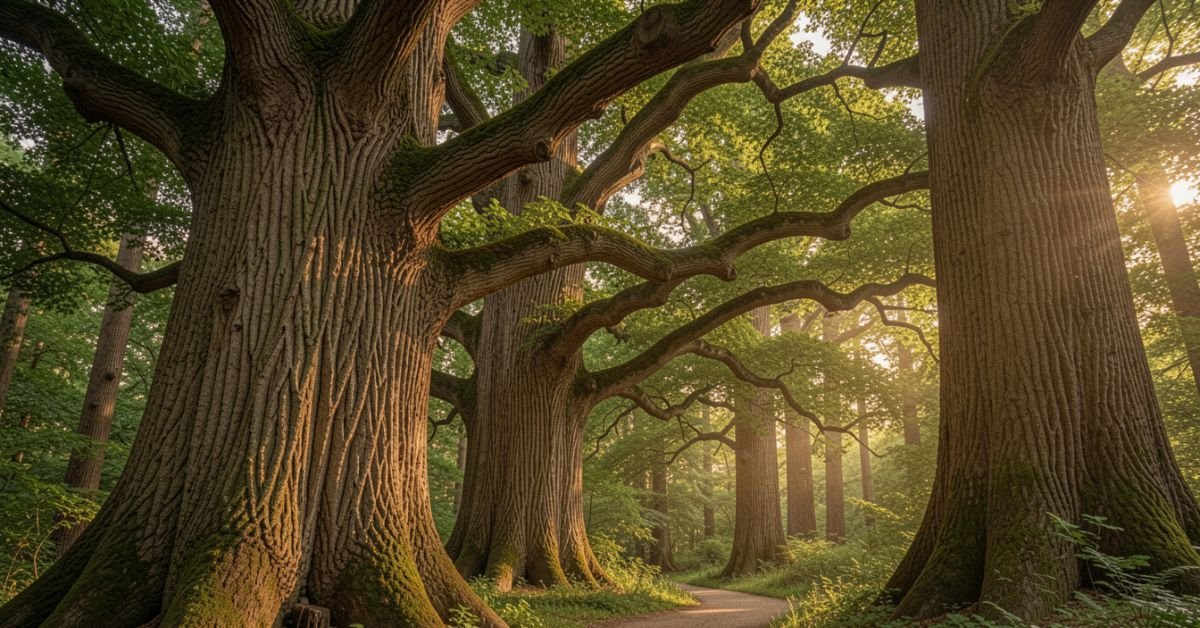
Tucked along the Olentangy State Scenic River just north of Columbus, this 1,200-acre gem protects some of central Ohio’s most impressive old trees. We’re talking sycamores estimated at 400–500 years old with trunks over 23 feet around, plus centuries-old oaks and hickories in a designated old-growth preserve.
What Makes Highbanks Metro Park’s Trees Special
Highbanks sits on dramatic 100-foot shale bluffs overlooking the river. The steep ravines and floodplains created perfect conditions for trees to grow huge and live long deep soil, consistent moisture, and protection from heavy logging.
The standout is the famous Giant Sycamore (American sycamore, Platanus occidentalis). Multiple sources put the largest specimens at 400–500 years old with circumferences of 23–24 feet. These are among the biggest and oldest sycamores in the region.
Inland, the Edward F. Hutchins Nature Preserve protects a true old-growth forest patch 206 acres of mixed-age woodland with many trees 150–300+ years old.
The Standout Trees You Can Actually See
| Tree Type | Estimated Age | Size Highlight | Best Trail / Location | Notes |
|---|---|---|---|---|
| Giant Sycamore | 400–500 years | 23–24 ft circumference | Olentangy River (River Bluff area) | Off-trail river walk only during guided events |
| White/Red Oaks | 200–300+ years | Massive canopy, thick trunks | Overlook Trail (near Pool Family cemetery) | Part of old-growth preserve |
| Sugar Maple & Hickory | 150–250+ years | Tall, straight forest canopy | Overlook Trail & Hutchins Preserve | Dense old-growth section |
| Beech | 150–200+ years | Twisted “haunted forest” look | Dripping Rock Trail | Dramatic shapes from young age |
How to Visit the Notable Old Trees in 2026
The Giant Sycamore: This one isn’t on a regular trail. Metro Parks runs guided “River Walk to the Giant Sycamore” events a couple of times per year (usually late summer when water levels allow). You hike in the river expect wet feet, rocks, and a rugged 1.5-mile round trip. Closed-toe water shoes required. Check the official Metro Parks calendar for 2026 dates.
The old-growth forest: Head straight to the Overlook Trail. It’s an easy-to-moderate 1.5-mile loop that takes you through the Edward F. Hutchins Nature Preserve. You’ll pass 200–300-year-old oaks right near the historic Pool Family cemetery stones. Stay on the path no off-trail wandering allowed in the preserve.
Other good options: Sycamore Trail for river-bottom sycamores and cottonwoods; Dripping Rock Trail for those twisted old beech trees.
Why These Trees Matter More in 2026
Central Ohio has lost most of its pre-settlement forest. Highbanks protects one of the last sizable old-growth remnants in the region. The park’s inclusion in the Old-Growth Forest Network (2022) and its National Historic Landmark status for ancient Native American earthworks make it a priority conservation site.
Statistical Proof The Hutchins Preserve alone supports 45 tree species, 22 shrubs, and 144 herbaceous plants. Many upland trees here are 150–300+ years old rare for central Ohio where most woodlands are younger second-growth. [Source: Metro Parks & Old-Growth Forest Network reports, 2025–2026]
Myth vs Fact
- Myth: You can just walk to the Giant Sycamore anytime. Fact: It’s off-trail and river-based. Only guided events are permitted for safety and resource protection.
- Myth: All the big trees are easy to reach. Fact: The oldest sycamores require a wet river hike; the upland old-growth is on maintained trails but still feels wild.
- Myth: These are just “big trees” like any park. Fact: Several are pre-settlement veterans and part of a nationally recognized old-growth preserve.
Practical Tips for 2026 Visitors
- Best time: Late spring for wildflowers under the canopy or early fall for color.
- Parking & access: Main entrance at 9466 Columbus Pike (US 23 North), Lewis Center. River Bluff area has its own small lot for events.
- What to bring: Sturdy shoes, water, bug spray, binoculars for eagles (yes, they nest here).
- Rules: Stay on trails in the nature preserve. No climbing or carving. Pets allowed on most trails but not in the preserve interior.
FAQs
How old is the Giant Sycamore in Highbanks Metro Park?
Estimates range from 400 to 500 years. It’s one of the oldest and largest sycamores documented in the region, with a circumference of 23–24 feet.
Can I see the old trees without a guided tour?
Yes the 200–300-year-old oaks on the Overlook Trail and Hutchins Nature Preserve are accessible anytime the park is open. The Giant Sycamore requires a guided river walk.
What trails have the oldest trees at Highbanks?
Overlook Trail (old-growth oaks and maples) and Dripping Rock Trail (ancient beech). The Sycamore Trail gives you big river-bottom sycamores and cottonwoods.
Is the old-growth forest in Highbanks protected?
The 206-acre Edward F. Hutchins Nature Preserve is part of the national Old-Growth Forest Network and a State Nature Preserve. No off-trail activity is allowed.
When are the river walks to the Giant Sycamore in 2026?
Dates are announced on the Metro Parks calendar each year usually a couple of summer/fall events when river levels cooperate. Check metroparks.net/events regularly.
Are there any champion or record trees in Lewis Center?
Highbanks holds several of the largest and oldest trees in central Ohio, including standout sycamores and upland oaks recognized in local champion-tree lists.
Conclusion
Highbanks Metro Park’s notable old trees the 400–500-year Giant Sycamores, the ancient oaks on the Overlook Trail, and the protected old-growth forest in the Hutchins Preserve give Lewis Center something truly rare: a direct link to Ohio’s deep natural past.

Dojen Moe is the perfect mash-up of two very Japanese ideas: doujin self-published, independent creative works made by fans for fans and moe that deep, warm emotional pull certain characters create. In 2026 it’s no longer a niche whisper in otaku circles; it’s a full creative movement spreading across digital platforms, conventions, and personal sketchbooks worldwide.
What Exactly Is Dojen Moe?
Doujen comes from doujin or doujinshi fan-made manga, illustrations, comics, short stories, or digital art created outside commercial publishing. “Moe” is the Japanese slang for that irresistible surge of fondness toward cute, innocent, or emotionally resonant characters.
Put them together and you get dojen moe: independent, passion-driven works that deliberately lean into soft, heartfelt character moments designed to make you feel something genuine and comforting.
It’s not about big action sequences or edgy plots. It’s about quiet kitchen scenes, gentle misunderstandings, or a character’s small act of kindness that somehow feels profoundly human. Think of it as fan creativity that prioritizes emotional intimacy over spectacle.
Origins and How It Evolved into a 2026 Phenomenon
Doujin culture has existed for decades through Comiket and small print runs. Moe aesthetics exploded in the early 2000s with series that made viewers fall for characters rather than just root for them.
By 2024–2025 creators started intentionally combining the two. Digital tools made self-publishing effortless. Social media rewarded emotionally shareable art. And after years of high-stress media, audiences craved something softer.
In 2026 dojen moe feels like the natural response: grassroots, human-scale creativity that cuts through algorithm noise.
Core Characteristics That Define Dojen Moe Art
- Emotional focus: Characters evoke protectiveness, nostalgia, or gentle joy rather than excitement or fear.
- Soft visual language: Pastel palettes, rounded lines, expressive eyes, warm lighting, everyday settings.
- Character-driven storytelling: Short scenes or single illustrations that tell a complete emotional story.
- Indie spirit: Made by one person or small circles, often shared freely or sold at small events.
- Community first: Creators and fans interact directly comments, collabs, and mutual appreciation.
| Element | Traditional Doujinshi | Mainstream Anime | Dojen Moe |
|---|---|---|---|
| Publishing | Self-published, small runs | Studio-backed, mass market | Self-published + digital |
| Tone | Varies (often parody or niche) | High energy or dramatic | Soft, comforting, heartfelt |
| Character emphasis | Plot or fanservice | Heroic or complex arcs | Emotional vulnerability |
| Audience connection | Insider references | Broad entertainment | Deep personal affection |
| Distribution 2026 | Conventions + print | Streaming platforms | Social media + personal sites |
Why Dojen Moe Feels So Relevant Right Now
After the polished, high-production overload of the last decade, people are reconnecting with art that feels handmade and sincere. Dojen moe delivers exactly that. It’s the creative equivalent of a warm blanket.
Statistical Proof The global manga and related fan-content market continues its strong growth trajectory, with indie and digital self-publishing segments showing the fastest adoption among younger creators in 2025–2026.
Myth vs Fact
- Myth: Dojen moe is just another word for hentai or adult doujin. Fact: While some doujin works cross into mature territory, the core dojen moe movement in 2026 emphasizes wholesome emotional connection and cute, comforting aesthetics.
- Myth: You need to be a professional artist to participate. Fact: It’s built by everyday fans using free or cheap digital tools many creators started with nothing but passion and a tablet.
- Myth: It’s only popular in Japan. Fact: English-speaking communities on Instagram, TikTok, and small Discord servers have made it a truly global scene.
How to Experience or Create Dojen Moe Yourself
- Find it: Search hashtags like #DojenMoe, #DoujinMoe, or #MoeDoujin on Instagram, Pixiv, or Twitter/X.
- Support creators: Buy digital downloads or small print zines at online indie shops.
- Start creating: Pick a simple character concept, focus on one gentle emotion, and draw or write a short scene.
- Join the conversation: Share your work with respectful tags and engage positively with others.
- Attend events: Look for smaller doujin-focused online conventions or local artist alleys that highlight soft-style works.
Future of Dojen Moe: What’s Next in 2026 and Beyond
Expect tighter integration with AI-assisted tools for concept sketching (while keeping the human emotional core), more cross-cultural collabs, and perhaps dedicated digital marketplaces built specifically for soft indie works. The movement is still young, but its emphasis on genuine connection positions it perfectly for a world that’s tired of cold perfection.
FAQ
What does “dojen moe” actually mean?
It’s the blend of “doujin” (self-published fan works) and “moe” (that warm, affectionate feeling certain cute or innocent characters create). In practice it describes indie art and stories built around emotional softness and heartwarming moments.
Is dojen moe the same as regular doujinshi?
Traditional doujinshi can cover any genre or tone. Dojen moe specifically highlights the moe aesthetic soft, comforting, character-focused emotional appeal.
Do I need to speak Japanese to enjoy or make dojen moe?
The visual language and emotional core translate perfectly. Most 2026 creators share work with English captions or no text at all so anyone can connect.
Where can I find dojen moe art in 2026?
Start on Instagram and Pixiv with the hashtags #DojenMoe or #DoujinMoe. Small Discord communities and artist alleys at indie conventions are also goldmines.
Can beginners create dojen moe style work?
The style rewards heart over technical perfection. Focus on simple poses, warm colors, and genuine feeling tools like free drawing apps are more than enough to start.
Is dojen moe just a passing trend?
It feels more like a natural evolution. After years of high-production content, audiences are craving sincere, handmade emotional work and that craving isn’t going away anytime soon.
Conclusion
Dojen moe isn’t loud. It doesn’t need explosions or viral dances. It simply reminds us why we fell in love with anime and manga in the first place: characters who feel real enough to care about.

Priority Infrastructure Plan is the state’s smart way of making sure growth pays for growth fairly, predictably, and in the right places. In 2026, with population pressures still climbing and councils updating their plans under the Planning Act, understanding the PIP (or its modern LGIP cousin) is essential whether you’re a developer, first-home buyer, investor, or local resident.
What a Priority Infrastructure Plan Actually Is
A Priority Infrastructure Plan (PIP) is the statutory document inside a Queensland council’s planning scheme that coordinates land-use growth with the trunk infrastructure needed to support it. Trunk infrastructure means the big shared stuff main water pipes, sewer mains, major roads, stormwater networks, and land for parks and community facilities not the connections right at your front gate.
It does three big things:
- Identifies the Priority Infrastructure Area (PIA) the zones where council will prioritise delivering that infrastructure over the next 10–15 years.
- Sets desired standards of service for each network so everyone knows what “good enough” looks like.
- Creates a transparent, equitable way to charge new development for its fair share of those costs.
Under the Planning Act 2016 the formal name shifted toward Local Government Infrastructure Plan (LGIP) in many schemes, but “PIP” remains the everyday term and is still used in planning documents and conversations.
Core Components of Every PIP
| Component | What It Covers | Why It Matters in 2026 |
|---|---|---|
| Planning Assumptions | Projected dwellings, floor space, population growth | Ensures the plan matches real demand |
| Priority Infrastructure Area (PIA) | 10–15 year growth zone | Focuses investment where it’s needed most |
| Desired Standards of Service | Performance targets for each network | Stops under-delivery or gold-plating |
| Plans for Trunk Infrastructure | Maps of existing + planned pipes, roads, parks | Gives certainty to developers and buyers |
| Infrastructure Charges | Levies new development pays | Funds the works without burdening ratepayers |
How the Priority Infrastructure Area (PIA) Shapes Where Growth Happens
The PIA is the geographic heart of the plan. Inside it, council commits to delivering trunk infrastructure in a sequenced, cost-effective way. Outside it, you’re on your own for many services or face higher costs and longer delays.
This isn’t about stopping growth it’s about sequencing it so roads don’t clog and pipes don’t run dry. In 2026 most councils have refined their PIAs to align with state housing targets while protecting flood-prone or high-value agricultural land.
The Five Trunk Infrastructure Networks Explained
- Water Supply – Main reticulation, reservoirs, treatment upgrades.
- Sewerage – Trunk mains, pump stations, treatment plants.
- Transport – Arterial and sub-arterial roads, public transport corridors.
- Stormwater – Major drainage networks and detention basins.
- Parks & Community Facilities – Land for local and district parks, sometimes community centres.
Each network has its own desired standard of service written into the PIP things like minimum water pressure, fire-flow requirements, or hectares of parkland per 1,000 residents.
How Infrastructure Charges Work in Practice
New development pays an adopted charge based on the extra demand it creates. The formula is transparent: council calculates the total cost of planned trunk works, subtracts any grants or existing contributions, then apportions the remainder across expected new dwellings or floor space.
Typical 2026 Charge Ranges (varies by council and location)
- Residential lot: $15,000–$45,000 depending on location and network demands
- Unit/townhouse: lower per dwelling but still significant
- Commercial/industrial: based on floor area or trip generation
These charges are indexed annually and must be spent on the works identified in the PIP no slush fund.

Myth vs Fact
Myth: The PIP is just a way for councils to squeeze more money out of developers.
Fact: It replaces ad-hoc negotiations with predictable, capped charges and guarantees the infrastructure will actually be delivered when needed.
Myth: If my land is outside the PIA I can never develop it.
Fact: You can but you’ll likely pay for your own trunk-level infrastructure or wait longer for council to extend services.
Myth: PIP charges disappear once you pay them.
Fact: They fund trunk works only; you still pay for internal site services, headworks contributions in some cases, and ongoing rates.
From the Trenches: What Developers and Planners See in 2026
After years working with councils on scheme updates and major master-planned communities, the biggest mistake I see is treating the PIP as an afterthought. Smart teams pull the latest adopted PIP before even sketching a subdivision. They model charges early, check PIA boundaries, and factor in the desired standards so their designs align instead of fighting them later.
The payoff? Faster approvals, fewer conditions, and buyers who know the roads and pipes will actually work when they move in. In 2026, with housing supply still a state priority, councils that keep their PIPs up to date are seeing smoother delivery and fewer disputes.
FAQs
What is the difference between a PIP and an LGIP?
They’re essentially the same thing. LGIP is the term used in newer planning schemes under the 2016 Act, while PIP is the older shorthand still used everywhere. Both do the same job plan trunk infrastructure and set charges.
Does every Queensland council have a Priority Infrastructure Plan?
High-growth councils are required to have one. Smaller or low-growth councils may use alternative approaches, but most major areas (SEQ, Sunshine Coast, Townsville, Mackay, Cairns, etc.) have active PIPs or LGIPs.
Can I get a refund or credit if I pay the charge but the infrastructure is delayed? Councils must refund or credit unused portions in certain circumstances, but the PIP itself includes timing assumptions. Check the specific scheme’s refund policy.
How do I find my local council’s current PIP?
Go to the council website Planning Scheme Priority Infrastructure Plan or LGIP section. Most publish the full document, maps, and charge rates online and update them regularly.
Will the PIP affect my building approval or subdivision?
Yes your application will be assessed against it. If your site is in the PIA and you pay the charge, you’re contributing to the planned works. Outside the PIA you may need extra justification or works.
Are charges the same everywhere? No. They vary significantly between councils and even within a council’s area based on which networks need the most investment.
CONCLUSION
The Priority Infrastructure Plan isn’t bureaucracy it’s the mechanism that turns “we need more housing” into actual houses with working roads, water, and parks. In 2026 it remains one of the clearest tools Queensland has for sequenced, funded growth that doesn’t leave existing ratepayers footing the bill.
-

 ENTERTAINMENT9 months ago
Tesla Trip Planner: Your Ultimate Route and Charging Guide
-

 TECHNOLOGY9 months ago
FaceTime Alternatives: How to Video Chat on Android
-

 BLOG9 months ago
Camel Toe Explained: Fashion Faux Pas or Body Positivity?
-

 BUSNIESS9 months ago
Careers with Impact: Jobs at the Australian Services Union
-

 FASHION9 months ago
Wrist Wonders: Handcrafted Bracelet Boutique
-

 BLOG9 months ago
Jalalabad India: A Hidden Gem of Punjab’s Heartland
-

 ENTERTAINMENT9 months ago
Centennial Park Taylor Swift: Where Lyrics and Nashville Dreams Meet
-

 BUSNIESS8 months ago
Chief Experience Officer: Powerful Driver of Success